Showing posts with label editors. Show all posts

Tuesday, August 08, 2006

Universal Untruth (Yet another writing post)


They say that anyone who attempts to defend his or her self in court has a fool for a client. Well, let's translate that to writing perspective. The writer who tries to critique their own work has a fool for a judge.

Let me illustrate my point with a little slice from my writing life:

A few weeks ago, my wife heard that Denise Little, an anthology editor she's worked with, had come up short on an upcoming anthology. Several of the people on her invited list of writers had come in much shorter than usual, so she needed 10K words, and she needed them fast, so the book could be turned in. Chris immediately wrote her and said that one or both of us would come up with stories for her.

Mind you, "fast" in this case meant we heard about it on Friday, and she needed stories by the middle of the following week. Mind you, this was a theme anthology, the working title being "Front Lines," and so not just any story would do.

Sub-lesson #1 here for the aspiring and new writers in our midst: this is the sort of situation that separates the writers from the neos. The ability to produce work quickly, on time, to specification, and to market, is a highly valued skill in the marketplace. When these sorts of opportunities come along, and they will from time to time, the ability to follow-through will get you far.

So, kudos to Chris here. She very quickly came up with a fantasy idea, wrote it, mailed it over the weekend, and had a sale by Monday. That's professionalism for you.

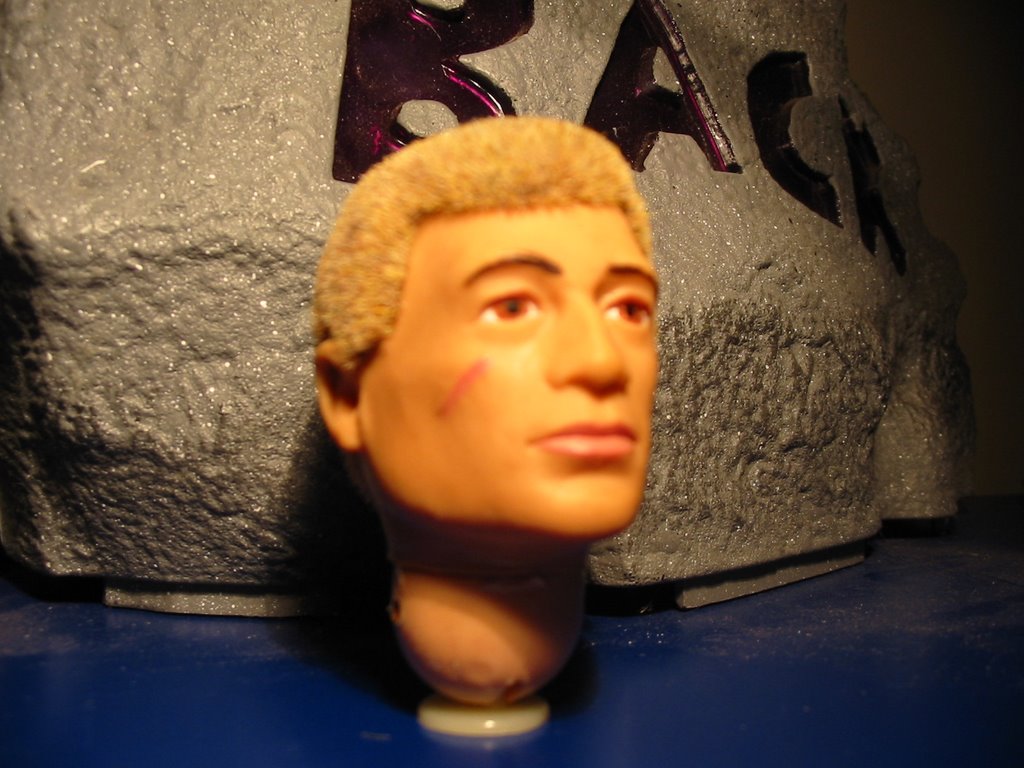
I, on the other hand, was struggling. I had a seed of an idea, derived from my hobby of collecting GI Joes (and similar 12" action figures) and my childhood love of GI Joe, Major Matt Mason, and their kin. It also played on the sad fact that childhood is an endangered institution. These days, kids seem to go straight from diapers to video games, computers, cell-phones, and I-pods loaded with gangsta-rap. They're giving up traditional toys younger and younger, and simply never take to them with the enthusiasm that earlier generations did. It's my feeling that with the loss of that imaginative and unstructured play, we're losing something important from our culture, something that may come back to bite us in the ass later.

So, okay, I had a subject, and a theme, but I didn't have a story. I decided my protagonist would be "Backyard Joe," a tired old action figure who was still holding down the trenches in an overgrown back yard, long after the kids have gone on to other things. Valiantly, he guards his post against an unseen enemy that seems to lurk just beyond the high grass. His only companion is the "Limey" (a character in fact inspired by Action Man, GI Joe's counterpart in the UK) an action figure who seems even more broken down and dispirited than he is.

All this is good, but this gives us a character, in a situation, with a somewhat loosely defined problem. That's an opening, but it isn't a story, and that's where I struggled. I had a vague idea of where it might end, but I wasn't at all sure how to get there. The bridging events, the dark moment, the turning point of the story; these things were all missing. Even if I can make it work, there didn't seem to be enough meat there. The story needed to be at least 2000 words long, and I didn't see how I was going to make that with what I had.

So I write a little. I stare at the screen. I write a little more. I stare. I'm stuck. I hate most of what I've written. I hate the whole idea. Several times I'm tempted to throw it away and try to come up with a new idea, but I've got nothing, and I know that I'm probably just trading the devil I know for one I don't.

For me, the darkest moment was probably when Chris got word of her sale. I still was no closer to finishing, and I was starting to feel like a total fraud. (This is the kind of place where jealousy can rear its ugly head, and that's why I'm very wedded to the idea that other people's success is their own, and has nothing to do with you. You succeed or fail based on your own work. Other people's success can't hurt you professionally. It can bang your ego around, though, if you're busy having self-doubts.)

To put this in perspective, I've got a stack of novels under my belt, plus scripts, computer games, and other things. I've sold a fair number of short stories, including to major sf/f markets like Analog and The Magazine of Fantasy and Science Fiction, and to anthologies as well. But most of these sales were years ago, before I got distracted writing tie-in novels. More recently I've written stories under contract for tie-in anthologies, but not much original short fiction. Yeah, I can write a novel, but short-stories are a much different skill set.

So this is the part where the highly-trained writer brain starts making things up, starting with, "you're a fraud." Followed by "you can't do this," and "you never even knew how to do this, the other sales were flukes." That's what the writer brain does. It makes things up, and in that, it is often not your friend.

So this is also the part where many, maybe most, would-be writers give up. The difference with a pro is that (most days, anyway) they bull their way through. Maybe you justify it on the thought that, "maybe the editor will be so desperate for words they'll buy even this crap," if that's what it takes. But the professional thing to do is to keep going.

And I did. I figured out an approach, and by Tuesday evening I was over the considerable hump and headed for the ending. I'd managed to flesh out my story a bit, so that it easily went past 2000 words. I even got a good emotional hit while writing the ending, which I normally take as a very good sign.

In this case though, I was still a doubter. I was writing about something very personal to me. I got it, but would anyone else? Were my action-figure references too obscure, too "inside-joke" for the average reader? Had I written a "guy story" that my female editor just wouldn't get, or worse, just wouldn't like? Was it too sentimental? Was the ending too abstract?

The tragedy is, even at this point, some people still give up. The story goes in a drawer (literal or digital) never to emerge again, because the writer isn't sure that it will sell. Well, let me tell you, there's no certainty in this business, but if you don't submit it, you'll never know, and if you don't submit it, it can't sell.

By the time I'd gotten to my computer in the morning, there was a note from Denise saying that she was buying the story. I replied, thanking her, and saying "glad you liked the story."

To my surprise, I immediately got back a note starting, "Liked it, hah! I loved it!" It then went on to further praise the story's virtues. (Normally I wouldn't share the contents of such correspondence in public, and I hope Denise doesn't mind, as I do so only because it's necessary to the point I'm making.)

My first major point is, the writer is almost always the poorest judge of their own work. That doesn't mean that you can't look at your drafts and say, "this and this would make it better." You make this kinds of judgments with every word you choose to type.

What it means is that, when it comes to making critical judgments as to the over-all value or quality of the work, the writer's perspective is hopelessly skewed. This is a vital lesson for every aspiring writer to learn. You can have a first reader, of course, but any reader you know well enough to be worth trusting on other merits is probably too close to you to be entirely unbiased. Ultimately, the only test, imprecise though it is, of the merits of your work is to put it out in the marketplace, and see what happens.

Mind you, just because you think its crap, doesn't mean it isn't. In the beginning, especially, it quite possibly is. Don't worry about it. Mail it. Nobody is going to hold it against you for trying.

But as time goes on, and you've made some sales, it will be less and less likely that it's crap, no matter what the little critical-voice in your head says. Odds are it's at least competent. On good days, it may be far better than that. Maybe surprisingly better.

My second major point is that it isn't unusual to hit a point in the process where you're unhappy with what you're writing and lose confidence in yourself. Maybe some writers skip past that (and I envy them), but in my experience talking with many, many writers is that (for novels at least) it happens to a lot of writers at some point in every project. Knowing that it's usual, that others suffer from it, and that your critical-voice is entirely untrustworthy at this point; is a starting point in fighting your way over the barriers.

If you write, or want to write, and this hasn't happened to you, it probably will. How you respond to this challenge will be a major hurdle in your journey to professional success.

Keep writing.


I'm well behind in my posting here, and I've read a number of interesting things recently that I'd like to talk with you about, several of them writing related. Hopefully you'll be seeing some more major postings here from me in the next few days.

Meanwhile, remember that I post a new Minons at Work cartoon panel every Monday. Check it out, check back, and share it with your friends.

Thursday, July 06, 2006

Writers along the highway


Well, we're back from vacation. Obviously I didn't find time to post from the road, so I'll be backfilling here at some point. We had a good (if tiring trip). One enjoyable aspect was the opportunity to visit with writer friends, old and new, up and down the west coast.

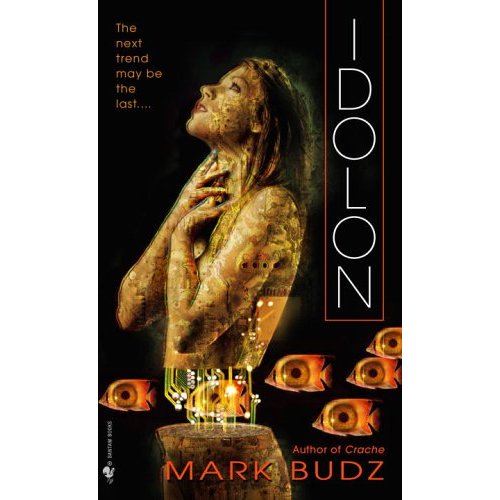
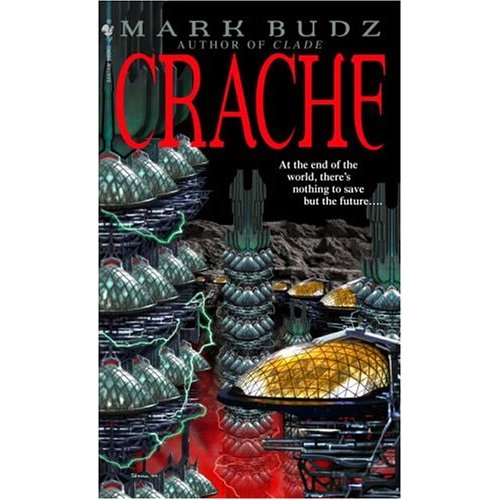
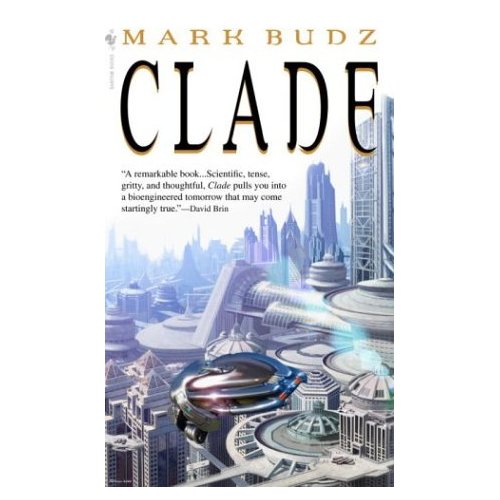
Our first stop was on the way down, where we stopped in the Bay Area long enough to have an enjoyable Chinese dinner with our friends Mark Budz and Marina Fitch. Both are novelists, and Mark gave me an advance-reading copy of his upcoming novel Idolon. This is Mark's third novel. His previous books, Clade and Crache were released to great critical acclaim (Publishers Weekly compares him to William Gibson) but just haven't gotten the reader attention they deserve. You should really check out Idolon when it's released this month, and see what you've been missing.

Then we trekked down to my old high-school stomping-grounds of North San Diego County and had a three-hour lunch (cue Gilligan's Island theme)with my old friend Gordon McComb and his wife Jennifer. Gordon and I used to collaborate back in my high-school and college days, and we did a number of student films together back in the day. My first professional publication (see a bit of it here and here) was an article in the old Science & Mechanics magazine written with Gordon.

Gordon went on to become a computer journalist and writer of technology books (everything from word processing software, to home robotics, to how to program your VCR so the number stops blinking). He was very successful, and even occasionally threw some work my way when I was still doing that kind of stuff. I knew he'd cut back on the writing lately, but I didn't know why.

Seems Gordon had people come up to thank him for his books, and then go on to describe the huge sums they were making as consultants based entirely on his work, far more than he was making on the books themselves! So these days, he's focused on his own consulting firm serving corporate clients and leaving the sucker-work -- er -- books, to somebody else. Gordon also continues indulging his long-standing interest in robotics, and has started his own small company to manufacture and market robot components, Budget Robotics.

Anyway, I haven't seen Gordon in years, and it was great to have a chance to catch up. Maybe I can convince he and Jennifer to bail out of Southern California before the Big One hits and move to the northwest (probably just in time for a volcano to erupt, but...).

Finally, on the way home, we stopped off in Eugene, Oregon for dinner with our friends Sean and Rose Prescott, and Adrian Phoenix. It's the first time we've seen Adrian since she sold her first novel, a vampire book, on a two-book deal to Pocket. Her novel will be used to launch an entirely new book line for Pocket, so they're obviously impressed. This is very exciting news, and overdue. Adrian is a fine writer with a unique voice. So, if you'd like a chance to get in on the ground-floor with someone who could be the next Anne Rice, you should look for the name Adrian Phoenix in months and years to come.

Thursday, March 30, 2006

Writers and other delusional people

UPDATED March 7, 2009 - Check at the end of the original post for new truths and comments.

I heard yet another story the other day of a writer being scammed by a so-called agent. What was most horrifying about the story was not that they were paying the agent to rewrite their stuff, but the sheer glee and delight with which the writer was submitting to the process.

Rule #1 in this business is: Money always flows towards the writer. If it doesn't, something is seriously wrong. If you fail to recognize this, or worse, mistake it for success, you are playing the fool.

There is no more gullible, self-delusional, fog-headed being on the planet than an aspiring writer. So predictable and common are their delusions that an entire industry of crooks, con-men and scam artists exists to exploit them, and such a sweet deal it is for them, too. Not only are most of their scams perfectly legal, their marks are actually grateful to be scammed! It doesn't get much better for a predator than that. It's like the entire herd of antelope crowding around the lion shouting, "Eat me! No, eat me!"

Wait. No. Keep reading. You may resemble this remark. Fact is, most of us do at one time or another. And if it does describe you, take comfort that you have plenty of company. I hear from these people all the time. Some of them I've had extended correspondence with, and I've learned some things.

Most of the writers getting scammed aren't dumb. They're nice, intelligent people who sincerely want to be writers, and have simply lost their way. Most of them are so invested in whatever flavor of Kool-aid they've swallowed that they not only can't see the truth, they don't want to. Yet most of them are aware, on some level, that something is wrong. That's usually why they write me. They have concerns. They have questions. Just not enough to wake up and look around. The correspondence, in antelope-terms, usually goes something like this: "This lion has actually agreed to take me on! Right now, it's chewing on my leg. And it's great! Although, I'm concerned about the bleeding. And the dismemberment. But really, it's good! It's great! Uh, should there be so much pain? But I'm good!"


Okay, here are the truths, some of them anyway, that every writer should know. Read them. Memorize them, Live them. And please, do so before you graze among the scam agents, book doctors, vanity publishers, and the various flavors of publishing delusionaries who, with the best of intentions, invite you to participate in their own mad delusions, and partake of their special Kool-aid.


Truth Numero Uno - Being Published vs. Being Read


First truth, and maybe even more important than rule #1 above (or at least as important): Writers do not need to be published. Writers need to be read. This should be obvious, but it's not. Having a pallet full of expensive hardcovers in your garage is not getting you read. Being in an ebook that's downloaded thirty times isn't getting you read. Going out through a small press or a literary zine with a print run of a hundred copies isn't getting you read (not in the way that you want to be, anyway).

Being read means selling to a national magazine, being published through a real book publisher and showing up on chain-store shelves, or at least being published on a high-traffic web-site with thousands of visitors daily. Yet again and again writers are seduced with the notion of seeing their manuscript in print between two covers. If this is you, my advice is this: Go to Kinkos and pick out a nice font, and some pretty paper. Then, once you have a book to look at, get over it and get back to the real work of getting read, or forget being a writer.

Corollary to Rule Numero Uno: The markets that will get you read most are generally also the markets that can afford to pay you the most money. Refer to Rule Number the Second.

Rule Number the Second - Payment

If you don't get paid, and I mean up-front, then it isn't a sale. People who don't have money to pay you generally don't have money because they aren't selling books. Refer back to Rule Numero Uno.

Corollary to Rule Number the Second: "Paid in copies" is an oxymoron.

Second corollary to Rule Number the Second: An advance is the only money you can ever count on, and even then, the check has to clear.

First Royalty Statement of Rule Number the Second: 6% of nothing is nothing.

Second Royalty Statement of Rule Number the Second: 100% of nothing is nothing.

Third Royalty Statement of Rule Number the Second: 110% of nothing is still nothing.

Rule Third, Third, Third - Editorial Opinions

Rule Third, Third, Third: Ultimately the only opinions about a manuscript that count are yours and the person who can actually buy the manuscript.

Rule Third, Third, Third Corollary One: Your mother cannot buy the manuscript.

Rule Third, Third, Third Corollary Two: Your workshop cannot buy the manuscript.

Rule Third, Third, Third Corollary Three: Your agent cannot buy the manuscript.

None of which means you can't listen to these other people, but the responsibility to apply (or not apply) their opinions is ultimately yours.

Scofield's Axiom (a superset of Rule Third, Third, Third): You are responsible for your own career.

Rule the Four - The Secret Handshake

Rule the Four: There is no secret handshake.

Rules 5 - Agents

Rule 5a: Any agent you can get as an unpublished, unsold writer is most likely not anybody you want as an agent. There are rare exceptions, but they are rare, and they are exceptions. Do not assume the agent courting you is either, until you have done much research.

Rule 5b: The primary job of an agent is to submit manuscripts and make deals. Agents do not sell manuscripts. Manuscripts sell themselves. If your manuscript is not equal to this task, the best agent in the world cannot help it.

Rule 5c: Anyone can call themselves an agent (just as anyone can call themselves a publisher). Saying it does not make it so. Neither does a business-card, letterhead, a web-site, or a line of snappy banter.

Rule 5d: Agents make their living off a percentage of the income stream of the writers they represent. Any deviation from this, either in terms of your own money or anyone else's, is at best highly suspect.

Rule 5e: Agents work for you, and not the other way around. That still doesn't mean you pay them, except as described in 5d.

Rules VI - Ideas

Rule VIa - Ideas are cheap. Ideas are plentiful. Stop thinking of them as being made of gold. A good writer can turn a bad idea into a good book far easier than a bad writer can turn a great idea into a good book. If you have only one great idea for a book, the best thing you can do is put it aside and think of a dozen more, because until you can do that, you probably aren't going anywhere as a writer.

Rule VIb - Nobody is going to steal your silly idea. Probably it isn't worth stealing, and if it is worth stealing, you probably aren't the first one to come up with it. In any case, so what if they do steal it? If you had an "idea for a house," and somebody else built it, would the house belong to you?

Rule VIc - Stealing words is a crime. Stealing ideas is frequently a smart thing to do, but always steal from the best. Start with Shakespeare and work your way forward.

Rule ala Seven - The Easy Genre

Rule ala Seven: There is no easy genre. Romance is not easy. Science fiction is not easy. Fantasy is not easy. Writing children's books is not only not easy, it is very, very hard. People looking for an "easy" genre don't want to write, they want to have written. They are pretenders. If you are the real deal, don't worry about what is easy, or what is hot. Write the stories you want to write, and the stories you want to tell. Practice. Develop your skills. You can worry about marketing later.

Rules da 8 - How Becoming Published Will Change Your Life

Rule da 8: When you make your first sale, your problems are only beginning.

Rule da 8.1: Publishers don't buy books, they buy careers. If you aren't thinking past your first book, you are of very little value to anyone. Pray the publisher forgets to ask.

Rule da 8.2: Wash, rinse, repeat. Repeating is the hard part.

Rule da 8.3: The only time a second book can be easier than the first book is when the second book is already written, and even there lie pitfalls.

Rule da 8.4: You can't rest on your laurels unless you have some, and even then, laurels don't pay the electric bill.

Rule da 8.5: Sharks gotta swim, writers gotta write. Sharks stop swimming, they die. What does this tell you about writers?

Statement of Limitation

Those are only a few of the truths that aspiring writers need to know, but they're enough for you to chew on for a while. Pretty much, success in this business boils down to do the work, submit the work, and keep learning. Don't waste your time looking for shortcuts, because none of them preclude these three basics and the search will waste your time.

And remember that you don't even have the right to call yourself a failure if you don't try, and you still don't have the right unless you've stopped trying. Until then, you're still a success waiting to happen.

Good luck out there. Just remember, you make your own luck.

UPDATE March 7, 2009 - YET MORE TRUTH
Here we are a couple years later, and I find myself revisiting this post, and lo, among the comments below (you can dig though yourself to find the context, though it isn't especially important), I made the following statement:

"I have a great agent that I'm very happy with."

Looking back at that, I added the following comment, and having done that, I decided it was important enough to move up here where people can more easily find it. Here is a slightly reedited version:

-------------

Interesting reading my comment above. See, my the Great Agent I mentioned is now somebody else's great agent.

Actually, they were somebody else's great agent while they working for me too. Turns out they weren't MY great agent.

So allow me to add:

RULES OF AGENTS

RULE OF AGENTS NUMBER THE FIRST
No great agent is a great agent unless they're great for YOU. It doesn't matter how good an agent they are for someone else. If you're going to work together, you have to be compatible in your goals and methods and they must be helping your career. It's a relationship. There are no absolutes.

RULE OF AGENTS #B
Ask not what you can do for your agent. Ask what has your agent done for you lately.

RULE OF AGENTS No. III
Despite what they'd like you to think, you don't need your agent nearly as much as your agent needs you. (And if you DID need them more than they need you, why should you trust them to serve your best interests, and not their own?)

RULE OF AGENTS Nbr. Fore
Should you discover your great agent is not great for you (or perhaps not great at all) apply SCOFIELD'S AXIOM (see the previous rules list) until the problem goes away. Not having an agent is an infinitely better situation than having an agent that isn't working for you.

-----------

Okay, let us return to the statement that started this:
"I have a great agent that I'm very happy with."

Let us add to the original list:
-----------

RULE NEIN - THE BELIEF RULE
Just because the writer believes something is true, does not make it so. The writer's capacity for self-delusion is boundless, endless, and sneaky as hell. None of us is immune.

Ever.

------------

Not even me.

And just so you don't think this is just sour grapes aimed at my former agent, it isn't. They really are someone's great agent, from what I can see. They might be yours.

Or not.

But when you're signed with an agent and things are perking along, it's easy to ignore the problems until you've done yourself considerable damage, and that's what happen to me. I let my agent's opinions undermine my self-confidence, and I sat on plenty of perfectly good novel projects until I let my career stall. (See "Rule Third, Third, Third - Editorial Opinions" above.)

I'm not saying my agent did it to me. I did it to myself, by hanging on with an agent whose methods and goals were not my own, and whose focus was (properly, from the agent's perspective) on bigger fish, and not the careers of smaller players like me.

I sat around for far, far too long fretting in the dark, before contacting my agent with hard questions, confronting the situation, and making the break.

Self delusion.

Why do writers do it?


As it happens, I'm currently reading an interesting book titled "Lonely Planets, the Natural Philosophy of Alien Life," by David Grinspoon (apparently out of print, but you can still buy it on Kindle) and yesterday I ran across these words:

"So strong is our desire for certainty in the face of this grand mystery that we cannot resist the urge to vastly overinterpret every bit of potential evidence." and "We find signals in the noise of existence and read into them the conclusions that we want to reach."

Grinspoon is talking about our (the big humanity "our") questions regarding the potential for intelligent life in the universe, but it applies perfectly to writers as well.

It's our nature. We're all sitting alone, looking out into the darkness, pulling patterns out of nothing, weaving stories out of dreams. It's hard to turn that off when we need to put on our business hats. Maybe it's impossible.

But we still have to keep trying.

Me too.

Good luck to us all.