Showing posts with label publishing. Show all posts

Saturday, March 07, 2009

An update to "Writers and Other Delusional People," and the "Truths of Writing."


Having learned new truths, and caught myself in a self-delusion, I find it necessary to update this three-year-old post. A lot of people seem to have found it useful the first time around, so go check it out here.

Tuesday, December 23, 2008

"Change is Coming" - or - "Are Bookstores Obsolete?"


There's a lot of panic in the air when it comes to publishing recently, what with announced purchasing freezes (as opposed to unannounced ones, that happen all the time), layoffs, bad news from book retail, and so on.

On one hand, I think it's overblown. Publishing isn't going to go away. Books will still get bought. Books will still get published. It's time for us writers to hunker down, tighten our belts, and keep pushing ahead. It's the people that panic and give up that are going to wash out. I believe that most of the rest of us will get through.

Yes, a lot of dead-wood will be trimmed, poorly performing lines, editors, and authors will find themselves in a difficult situation. But that sort of thing can actually be good for the industry.

On the other hand though, there's a strong counter-sentiment out there that publishing is recession-proof, and nothing will change because of the economy. I'm not so sure about that, and I have a gut feeling that this attitude can be as dangerous in these hard times as panic.

This isn't like the last few economic slumps where publishing has done quite well. It's a different economic, technological, and social environment this time, and I have a feeling that publishing-as-we-know-it will come through the recession radically transformed.

Why so?

Well, first of all, the whole business of book retailing in the United States (and elsewhere, but I know less about that) is in chaos. For years we've been hearing about how smaller independent bookstores are in trouble, pushed out by the chains. But now Borders is on the edge of bankruptcy, and nobody is partying over at Barnes and Noble, so it appears that business model is in trouble too.

Other players like Wal-Mart, Amazon, and eBooks are of increasing importance, but mass-market retailers don't carry the depth of selection needed to support a healthy book industry, and there are plenty of pitfalls before on-line sellers and/or eBooks can become the predominate means of book distribution.

Meanwhile, publishing will suffer as we go through the transition to whatever is coming next. Expect this situation to get better before it gets worse.

The next big problem is that books (and magazines, and newspapers) are an overpriced niche product in an increasingly crowded entertainment environment. In previous economic downturns, entertainment options were limited. Movies were expensive, there was no internet, video games, if they existed at all, were crude and expensive, and television offered limited options.

Now the internet is ubiquitous, video games are sophisticated and offer lots of value, cable and satellite tv offer hundreds of channels, and movies are cheap on DVD, and stream in via the internet and pay-per-view.

Another big difference is that the internet and cable are now considered essentials of life. Facing hard economic choices, people are going to let their cable or internet service slip before they can't pay the rent or electric bill, but not much before. And by the time you've made that hard choice, you aren't likely to head over to Borders for a $30 hard-cover novel, or even a $10 paperback.

Which brings me to pricing. Books are just way, way overpriced for the value they offer. Gone are the days when trashy paperbacks and pulp magazines offered cheap entertainment in an uncrowded competitive environment. Books are expensive to make, expensive to ship, and the return system doesn't make books any cheaper.

Books are also expensive to sell. You can offer a pretty extensive selection of DVDs in maybe thirty feet of wall space, assuming most are displayed spine-out. A video/computer game section might even be smaller, even if it includes some hardware and supports multiple platforms.

In book terms, that's tiny. Maybe it's one genre in a super-store, or a read-and-dash airport newsstand, or a tiny specialty bookstore that doesn't even try to cover all the bases.

I've been saying for years that the disadvantages of print books were overwhelming the advantages, but print has coasted along well past it prime on momentum alone. Now we're in crisis mode, and it isn't clear what happens next.

So, what does happen next? Well, I don't have a crystal ball, but I do have some opinions. Here are the players, and some predictions on what might happen to them.

Independent bookstores: I think the crisis came for the indies a long time, ago, and that ultimately may be good for them. A lot of the weaker stores are already gone, and a lot more won't survive this winter.

But I predict a lot will survive, and the smart ones will do well. Whatever happens to print books at mass market retail, there are still plenty of people who love them and will seek them out. If chain-stores start closing, and that seems likely, book lovers aren't going to find what they need at Wal-mart, and many still love the browsing experience that Amazon doesn't offer. Independent bookstores can position themselves to take up that slack, and it may give them the niche to survive.

Another trend that seems to be happening with independent bookstores is to move into used and antiquarian books, either shelved along-side new books, or exclusively. I can see how, in many respects, it's a great time to be a used book dealer. There's still a world of information and fiction out there that doesn't exist in electronic form, and possibly never will. And a lot of baby boomers are downsizing, retiring, or dying, putting their libraries on the market. There's a flood of good used books out there. It's finding the particular thing you need or want that's hard.

Used booksellers fill that void by finding and concentrating the good stuff, and can back up their retail sales with online sales and auctions. They benefit in that the profit margins on a well-run used book operation can be much higher than the traditionally slim-margin new book business.

That's at best a mixed blessing for publishers and us authors. People reading old books aren't buying new ones, and in a way, used bookstores (and libraries) put us in competition with ourselves. But I suppose anything that keeps people reading can't be entirely bad, and if some stores continue to offer new books, that's good too, especially if offering the used stuff allows them to keep their doors open.

Chain bookstores: These stores aren't going to go away, but expect downsizing and transitions in how they operate. It's a hard time for retail in general, and not just because of the economy. The internet, gas prices, traffic, busy schedules, all are shaking up the ways people shop in general, not just for books.

Already, book superstores are struggling to find a mix of merchandise (of which books and magazines are only a part) that will keep them afloat. The Borders where I shop has DVDs, music, books, magazines, comics, games, toys, novelty items, stationary, gifts, collectibles, calendars, coffee drinks, pastries, and lots more. That sort of diversification has worked for the chains for years, but now it's breaking down, first more music sales, and now movies, are moving to on-line distribution. Those two categories had been major profit centers, propping up stores that less saw themselves as book retailers, and more as entertainment retailers.

Overall, I don't see the outlook here as good, unless the chains can find a new profit center in addition to books. I don't expect chain stores to go away, but I do expect them to become fewer and possibly smaller. It's true, these folks need to learn how to sell books again, but that alone isn't going to keep them afloat.

eBooks: Though it still represents a small portion of book sales, it's one category where publishers are seeing growth in the downturn, and that's getting their attention.

Awareness at publishers is also way up, as most editors in major houses are making extensive use of electronic readers to read submissions, and by most reports, they love it. After years of foot-dragging, publishing finally seems willing to embrace electronic books.

The problem is, nobody knows what form eBook distribution is going to take, what reader platform will predominate, or how a move to eBooks is going to change the form of books themselves. There's huge opportunity here, but also huge risk.

But I think a move to electronic distribution is inevitable, and good. If nothing else, it offers the opportunity to lower book prices to the point where they can be more competitive with other information and entertainment media.

Yes, I still hear lots about how people love books, how nothing looks or smells or feels like a book, and about how books are just better and more convenient than any electronic reader.

But I still think about 90% of that is crap. Yes, many of us love books, have a great deal of nostalgia for books, are even a bit fetishistic about the sensory aspects of books. That offers a niche that will exist for some time, maybe forever. It changes nothing.

Books are too heavy, too bulky, too expensive, too fragile, too inconvenient and poorly designed in a hundred different ways that book-lovers have trained themselves to ignore. They just can't be the predominate means of distribution any more, especially for a (hopefully) new generation of readers.

(By the way, speaking of the next generation, one writer friend of mine is fond of pointing out that she sees young-people routinely reading books on-line, and only then buying physical copies of the books they love. She takes that as proof that young readers still love books in the way us oldsters did.

I'm not so sure. In those cases, I have to wonder if the physical book is being read, or if it's being displayed as a tangible artifact of what they read and like. If so, the book isn't a book, it's a token for a book, and such a token could potentially take many forms. It could be replaced by a collectible plaque, or a button you could attach to a jacket or backpack, or a trading card, or a coin, or an action figure, or a wearable zipper pull, or a picture on a social networking site, or a book-list on a cell-phone that can be wirelessly traded with friends, or who-knows-what.

I have the feeling there are new exciting marketing opportunities there, but that's just one more unknown in the list of many that surround eBook publishing.)

Right now the "big three" in terms of hardware platforms are the Amazon Kindle, the Sony reader, and (surprise, from out of nowhere) the iPhone. The Kindle has an early lead, but I'm keeping a wary eye on the iPhone. The iPhone is pretty poorly suited to being a book-reader, but it has a huge advantage in that it's already an indispensable accessory for millions of people around the world. I'm skeptical that an eBook reader that's only an eBook reader is going to last, in the same way that you almost never see a phone that's just a phone any more.

Actually a problem with both the iPhone, and to a lesser extent, the Kindle, is that they could represent future monopolies in book retailing, the way Apple has an anti-competitive strangle on the music business now.

I'd much prefer that things shake out to a more open model, where readers (and publishers) can choose from a variety of retail sources and hardware suppliers, and where any reader, regardless of what kind of reader they own, will have access to any book from any publisher.

It isn't clear things are going to shake out that way. In fact, at best I'd give it even odds at this point. Apple and Amazon both would be happy with a monopoly, or at least, a dominating closed platform.

It also isn't clear what eBooks mean for the kinds and lengths of books sold. A lot of what a book is has always been defined by the physical format of the book and the mechanics of marketing it. If a book is too long, it's too big, heavy, and expensive to carry around or sell. If it's too short, it isn't cost effective to sell or market. If it's a series or trilogy, the chunks are going to come out in a certain size, at a certain interval.

It opens all sorts of new possibilities, and with them, uncertainties. I'm virtually certain, though, that we'll see new marketing models emerge.

For instance, MP3s all but killed the traditional music album, as people instead bought individual songs. Likewise, eBooks could kill anthologies and the few surviving fiction magazines, possibly replacing them with trusted fiction portals, where people kind find and purchase individual stories from trusted sources.

Some fiction formats, such as the novella, have probably been unnaturally restrained by print formats. Novellas are too short to be marketed effectively as books, but so big that it was difficult for magazines to publish them. Yet this is a natural length for storytelling that has the potential to prosper in several genres, especially science fiction, fantasy, romance, and possibly mystery as well.

ePublishing offers new opportunities for serialized and subscription-based fiction. Could we see a return to something like the pulps, where people subscribe to monthly novellas featuring series characters? Could we see something like the print-versions of soap-operas or telanovelas, where fiction is serialized in a longer, possibly open-ended form? Will eBooks ability to cheaply reproduce art or photos result in new kinds of heavily illustrated books and fiction?

All exciting possibilities. All annoying uncertainties.

eBooks are coming, that's more certain than ever. But it's far less clear what form that market will take, or what it will mean for writers.

Traditional Book Publishers: Again, much chaos ahead, but I don't see traditional publishers as going away. Finding good manuscripts and turning them into published works is still a complex and labor-intensive business. That won't change because of changes in retail or the advent of eBooks.

Yes, an eBook economy may offer new niches for small publishers, start-ups, players like Amazon or Apple who might try to publish the books carried on their platforms, and even self-publication by authors.

I predict we'll see some surprising new players emerge from all this. But I don't think the experience, resources, or brand value of the major publishers can be underestimated. They may look much different when this is all over, but they'll still be here.

To my mind, the important thing for conventional publishers is not to fight change, to remain flexible, and not to get greedy. A lot of experimentation is going to be necessary to find what works and doesn't work in this new publishing environment. They need to be ready, and to embrace this process.

They also need not to get greedy about the profit potential of eBooks. Prices for books must fall in the mass market to remain competitive, and they need to pass a portion of any additional profits along to authors and packagers. Failure to do this last thing will provide incentive to bypass them, either through new publishers, through small press, through self-publishing, or perhaps through new models like author-coops, that haven't even been tried yet.

And despite the inevitable shift, print books aren't going away soon, at least, if publishers play their cards right. One thing I think publishers need to think very seriously about, is to stop thinking about book, eBooks, and maybe even audio books, as separate products.

Compare this to DVD publishers, who have addressed sliding sales by, in many cases, including an electronic copy of the film along with the regular DVD. The purchaser can watch the DVD (and its extras) on a conventional player, a portable player, or even a computer. But they can also load their digital copy onto a variety of portable devices for easy viewing on the go. It's too early to know how effective this model is, but at least they're trying something different. And it's still a way of charging $20-30 for a new-release DVD instead of taking a cut of a $2-5 download.

Likewise, I think it would be a very good idea for book publishers to include a digital copy with, at least, new hardcovers, and possibly trades or even paperbacks. If people want only the digital copy, sell them that, and for less, but offer then a package deal at a price comparable to the printed book alone.

This addresses the younger "token collectors" my writer-friend has pointed out, and plays to the nostalgia value of printed books. A purchaser can read the print book in the tub or sitting in front of their home fireplace, and still have the convenience of reading the electronic copy if they manage to steal a few moments in on a commuter train, in an airport, or in a waiting room. It would give them a greater incentive to buy a hard-cover rather than waiting for a cheaper trade, paperback, or fully-electronic edition. (Another option would be to offer the electronic edition only with the hardcover edition, splitting it out as a separate item only after the paperback is released. Make it worth people's while to buy the hardcover.)

Just as importantly, it keeps traditional booksellers in the loop for some eBook sales, and allows for the kind of hand-selling that indie stores do well, and that isn't available to eBooks. Like I said, the trick is not to get greedy and try and sell the package for as much as the print and eBook editions would cost. If it costs anything extra at all, there should be a very substantial discount.

Audio-books, in file rather than CD or DVD format, can also be part of a "value-added, high convenience, high-flexibility" package that may be more attractive to readers than stand alone books.

Publishers may also want to consider adding other extras in the package, in the way extra features are offered on DVDs. This might include bonus short-fiction, photos, author interviews (audio or video), author readings from the text, and even documentaries for high-profile books.

No mix of publishing formats or materials should be ignored until the publishers find a new model that works and pushes books back into a sales and profit growth curve, for themselves, and their authors.

On-line sellers: This another growth area, at least for 500-pound gorilla Amazon, which is well positioned no matter how the shake-out of print vs. electronic editions goes. On-line sales are going to increasingly cut into the sales through traditional bookstores, large and small.

But there are still niches here. Amazon still hasn't replicated the browsing and social experience of visiting a bookstore, and given that their focus is increasingly on other areas of retailing, that doesn't seem to be a priority for them.

In the near term, that's a bonus for traditional bookstores, but it also might create opportunities for an innovative on-line competitor to Amazon. In particular, I think there's a huge opportunity for the first company to seamlessly combine the reading, book-purchasing experience with social networking sites and with Twitter-like phone services. Young people don't see reading as the solitary experience many of us baby-boomers grew up with. (To some extent, they don't see any aspect of their lives as solitary experiences.) There's a huge market there for the first company that figures out how to tap it.

What this means for authors:
There are some hard and uncertain times ahead.

Ahead? Hell, they're here.

But it isn't all bad news, especially for those authors who are flexible and open minded enough to try new things.

Continue to write novels and books and market them as you always have. But keep your eyes open and your ear to the ground for new trends. Don't be afraid to take some risks and try new things. Yes, most of them will fail, but you could also be catching the wave of the Next Big Trend.

I'd also recommend that, if you haven't written short fiction, or haven't used those muscles in a while, it's time to polish your skills. I think eBooks will create new opportunities for shorter-form and serialized fiction, and the authors who are able to move into those areas stand to benefit.

Also be prepared for changes in how you have to market your fiction. Book tours and press appearances are being replaced by web sites, chats, forums, social-networking sites, podcasts and YouTube videos. Publishers increasingly expect these things of their authors, and I don't see that trend going away. Quite the contrary.

But this can be good for your sales, and offers opportunities for the author to cross-market their works, and make money from selling other merchandise. While the profit margins aren't great, the tools are out there to do these things without creating a huge distraction from writing, which should always be the author's primary focus. In this environment, any potential revenue stream is nothing to sneeze at.

Things are changing, and there's much uncertainty ahead. But (Star Trek geek alert) there's an old Ferengi saying that goes something like this, "even in hard times, somebody is making a profit."

I couldn't agree more.

Are you ready?

Monday, November 10, 2008

More on book returns


As a follow-up to my recent post on how book-returns may be a necessary evil if you value independent bookstores, here's a great post from an industry-insider on the dark flip-side the equation. Returns are hurting publishers in a big way during the credit crunch, and it's behind a lot of the dire financial news you're hearing about publishing companies at the moment.

Ignoring my arguments about how they benefit indie booksellers, it's otherwise hard not to conclude that the return system is insane. But it isn't likely to go away, or even be substantially modified, any time soon. There are lots of reasons, but here are the big two:

For any one publisher to modify or eliminate the return system would be suicide for that publisher. Buyers, especially the 500-pound gorillas of retail, would simply stop ordering.

But for all, or even several of the publishers to change the terms in lockstep would undoubtedly cause anti-trust laws to kick in.

Wednesday, October 22, 2008

Loved to Death (or, why book-lovers don't always make great book-sellers)


We'll get to the meat of this post in a minute. First, some background material authors, would-be authors and book-lovers should be aware of...

I've just been reading a fascinating post over on the blog of Andrew Wheeler, a 20-year publishing professional who should know his stuff.

His post is prompted by the outrage several science fiction and fantasy authors about having their recent books "skipped" by chain bookstores. Apparently there was some talk of a boycott, but that seems to have gone nowhere so far. Probably a good thing.

Anyway, that's the start of Wheeler's post, but he goes way beyond that. He explains, in painful-but-necessary detail the realities of the book business. How and why books get ordered (or don't get ordered), and why there are some sound reasons for "skipping." He also talks about the flawed nostalgia that always clouds such discussions of business; the days when books were all good, bookstores were all small and independent, and good authors (was there any other kind?) were carefully sold, nurtured, and rewarded.

And that's where my post begins. Wheeler talks at length about the many shortcomings common to indie bookstores, and why many of them deserved to die. Many are (or were) poorly managed, under-funded, dirty, disorganized, stocked only to suit their owner's peculiar tastes and interests. I can't disagree with much of what he says.. We'll all been in great indie bookstores, but we've been in the clunkers too.

But he doesn't address another kind of doomed bookstore, one I've had the sad experience to observe closely in recent years here in my town: the Store That Loved Books Too Much.

We used to have a great little indie store in the town where I live. It's a beach-resort town, and so I became familiar with the store long before I moved here. In fact, though I lived in a much larger college town with some pretty good (chain and indie) bookstores, I always looked forward to visiting this one. A stop was a necessary part of any trip to the beach, and I rarely walked out without a bag full of books and periodicals.

It wasn't a big store, nor did it have a picturesque location. It was a bland storefront in a strip-mall, located next to a chain grocery store. It wasn't the store. It was what was in the store. Which was (stand by for the big surprise...) books.

Okay, it wasn't just that. It had new books. Every single week. Hot-off-the-presses books, mostly paperbacks, just the thing for a beach read. Most of the paperbacks were displayed face-out on racks along the side walls for easy browsing. Even better, new releases were on the floor below the racks so you couldn't miss them. Sure, this runs contrary to the logic that puts new books at the top, but it worked. The latest thing was there, and easy to find.

They weren't snotty either. They had a rich stock of best-sellers, thrillers, trashy-beach books, and good sections for all the genres, sci-fi, fantasy, mystery, romance, western, horror, you-name-it.

Oh sure, that wasn't all the store carried. They had a small but rich assortment of hard-covers and trades, fiction and non-fiction, children's books, an old-fashioned comic-spinner rack (the kind that collectors hate because they crease the comics, but which are great for kids who might actually read a comic for pleasure). a huge magazine section (another good source of beach reading), and a few gifts and cards.

They also had a few of those things that people think of when they think of indie bookstores. They had a nice little rack for local authors that was always well-stocked, and another one for staff picks and recommended reads. They hand-sold books, and were always glad to recommend an author or book in any given genre.

They also had a small blocked off corner for "adult" magazines. I never shopped back there (you believe me, right?), but it was somehow reassuring. I always figured a news-dealer that didn't traffic in material that was offending somebody just wasn't doing its part for the First Amendment, and was probably incomplete in other important areas as well.

Near as I could tell, they did a brisk business. There were always people in the store when I went in there, and the register was always busy. There were even lines sometimes.

What the store had, and I think this was key, was energy. The pulp and newsprint were always fresh, and smelled that way. It was exciting to go into the store on a shipment day, when the new books or periodicals were being unboxed and shelved. Often I'd hover around the magazine racks, waiting to see if the latest issue of one of my favorite magazines was coming out. Every week you'd go to scan the racks for your favorite authors and genres, and never were you disappointed. There was always something new and interesting, even if it wasn't what you went in looking for.

I've never seen anything like it, before or since, in such a small town. I was reminded of some of the big cities I'd lived in, the huge corner newsstands in Los Angeles, the huge Paperback City store in North Hollywood, the seedy-but-has-everything Magazine City in downtown Seattle. Most of these places were dirtier and colder and less refined than our little bookstore, but the buzz was there, and they shared another important characteristic: turnover. Most things moved, one way or another. If they didn't sell, then they were gone.

I'm an author, and I know, I know. If there's one word in the English language we writers hate, it's strip, at least where it's not being applied to an attractive member of the opposite sex (or same, if that's the way you play it).

Stripping, for those of you who don't know, is the process of getting credit on unsold paperbacks and periodicals. The book (or magazine, or comic, but what we complain about are the books) isn't returned. Only the cover is ripped off and returned for credit. The body of the item is (theoretically, that's another story) destroyed. It's a wasteful system, one rooted in history more than business logic, and one that authors just hate. A stripped book is not only unsold, not only returned for credit (and thus taken out of your royalties) it can't be reshipped or resold at any price. It not only isn't sold, it's an anti-sale.

One of the reasons that people like indie bookstores is that, in theory anyway, they don't strip as much. They keep back-lists on the shelves, and give books time to sell. They hand-sell good books that aren't from big-name authors, and aren't fortunate enough to make the Times best-seller list.

Like I said, theory. And at this little bookstore, there was a little truth to it. They shelved back-lists, for top authors and favorites anyway. They kept smaller authors they liked around for a while. But money and space were finite, and things got stripped.

Every. Single. Week.

See, there are places where stripping makes sense: places with high traffic and high volume. Places where people go to look for something new and fun to read. Places like our little store.

It was harsh but true, and while the writer in me would sometimes cringe (especially when it was one of my books), as a reader I loved the place. It was actually a factor in my decision to move to town.

So what happened?

Well, I'm unclear on the details. As I recall, the out-of-town owners sold-out, and it was bought by a well-meaning couple who clearly weren't cut out to run a bookstore. They didn't last long. Just long enough to mess up the stock and chase off a bunch of the staff.

They wanted to sell out, and when that didn't happen, planned to close.

Then a white-knight appeared in the form of a true book-lover. A guy who runs several used bookstores in the area, stores that are still open. There are good stores, and his flagship store is world-class, one of those places a book-lover can wander for hours through the maze-like stacks and never see everything.

But the trouble was, he loved books too much to run a new bookstore. He never stripped anything. The magazine second, already reduced, got smaller still. The adult section disappeared. The wall racks gave way to shelves to make room for the rapidly growing stock of dated (and eventually yellowing) paperbacks. Staff morale was low, and turnover rapid. Various other things were tried, more gifts and cards, games, more comics (but not enough to be a real comic store), music, a bigger kid's section, but nothing seemed to take hold. The foot traffic wasn't there to support it, because people weren't coming back as often.

I found myself going in less and less often. Once a month would catch the new magazines, and there weren't many of those that interested me any more. I stopped looking at the paperbacks. Of course, they were still happy to special order, but without the browsing experience to fuel purchases, I didn't do it often.

It was depressing. Nothing new to browse, and the new releases I'd heard about weren't going to be there. Maybe in the grocery-store next door...

It's sad when the book department at a grocery store starts to look better than a "real" bookstore.

Towards the end, the shelves thinned out as the old stock was presumably sold or stripped, but the money apparently wasn't there to restock. Books were face-out on the shelves, and got further and further apart. Used stock was moved in from other stores to fill the shelves. Even the reduced magazine section was getting thin. Hours were cut back.

There were "business for sale" signs in the windows, but it was hard to imagine what there was to buy. The stock was old and picked over, the traffic gone, the staff decimated, the reputation tarnished beyond repair. The death-spiral was solidly confirmed by then.

A couple weeks ago, while shopping for groceries, I happened to glance over and see the storefront dark and empty. I went over and examined the sign on the door. It had been closed for almost two weeks, and though I shop for groceries next door three or four times a week, I hadn't noticed.

Our little town is full of writers, and near as I can tell, none of them in my circle had noticed either. We all order our books on-line now, or drive to chain stores in the bigger towns in the valley 60 miles away, or go to indie-monster Powell's Books in Portland a couple hours from here.

I was sad, but hardly surprised. Clearly the book-loving-owner was just riding out the lease. He had loved a once-great store to death.

This isn't intended to be critical of the guy who bought the store. He's a neighbor of mine, and a good guy, and he still has those great used stores. It would have died a lot sooner without his intervention, and he tried to make it a success the best way he knew how. God knows how much money he lost in the deal, and I'm certainly not privy to all the many things behind-the-scenes that may have contributed to the store's slow demise.

But it's difficult to see how he could have ever succeeded because of that one blind spot of his. He couldn't strip books, and without that, the store could never again flourish.

Let that be a lesson. Independent book stores aren't magic fairy-lands of literature and enlightenment. They're businesses, and to succeed, they have to be run as such.

Chain book stores didn't kill our nifty little bookshop. We don't have any within 60 miles. Wal-Mart didn't kill it. It's 30 miles to the nearest big-box store. Amazon didn't kill it. Its troubles were apparent long before Amazon was a significant factor.

Management decisions killed it, plain and simple. Decisions that were well-intended, and right minded, and intended to be charitable to authors. Decisions that were still wrong.

The store is gone now, and it isn't coming back, nor is there likely to be anything to replace it. I order on-line, and I look forward to out-of-town trips where I can go to a large book-store and browse (as good as Amazon is in many respects, it has never replicated the book browsing experience).

I miss the magazines more than anything, but magazines are on the decline. Many of the more obscure magazines I used to enjoy have died, and with others, the internet provides more useful and current content. The more popular ones are cheaper to subscribe to, often at a fraction of the newsstand price, and increasingly that's just what I'm doing.

But to be honest, I suspect even this is short-term. Electronic book-readers are getting attractive, and I fully expect most print magazines to go the way of the dodo in only a few years. I recently subscribed to a magazine for three years (they were practically giving it away) and wondered if my need for a print version would run out before the subscription did.

Books are still with us though, for a while anyway, and independent stores have to depend on them to survive. Much as we rail against the return system and stripping, as illogical as it is, if we were somehow to end it today, it's the independent stores, the small stores, that would suffer the most. Chain stores have the size, the volume, the financial resources to soldier on through, but the marginal little stores like ours won't. Let our store serve as an example, and a warning.

Our beloved little store is gone, and it isn't coming back. Nostalgia is all we have left, and that doesn't pay the rent.

But some days, in some ways, stripping books does.

Thursday, June 19, 2008

A Thumbnail Cover Gallery


Click on the picture for a larger version.

A while back I started collecting recent covers from books in which Chris and I were published and combined them into a single graphic to use as a backdrop for our oft-neglected web-page. I realized today that I hadn't updated it in a long time, so I wasted several hours this afternoon tracking down covers (new ones, and old ones that I hadn't included before), resizing, and editing them in.

This is what I came up with. It still isn't complete. For example, I can think of at least four anthologies that aren't included (with several more coming before the year is out), plus a computer game (yeah, there are already two computer games in the grid that I wrote for), and a non-fiction book. I'll add another row later this year if I think of it.

It's been my experience that if you write and publish enough, you quickly start to forget things that you did, even if they were only a few years ago. Having an "at a glance" cover gallery like this is a bit of an ego booster, and a reminder on the hard days that you have accomplished something.

Monday, September 24, 2007

Gone but Not Forgotten


One sad thing about writing, as I often have, media tie-in novels, is that they have a tendency to last only as long as a given licensing agreement. That means that most of them have a very short shelf-life. In a year or two or three, they're out of print, and with very rare exceptions, they never come back. They're owned by whoever licensed the particular property. You don't get the rights back, and in general, the license owner has little or no reason to reprint the book.

Sometimes, that's a blessing, but other times, when you're especially pleased with a project, it's a very sad thing. For me, the latter was true of the two novels I wrote based on the since-canceled Marvel comic book, "Generation-X." They were fun to write, I was pleased with how they turned out, and I would have loved to have written more if I'd had the chance. Alas, I didn't, and now I never will.

But books have an after-life of their own, drifting through garage sales, used book-stores, eBay and the occasional library. Tonight (thanks to a Google Alert I have set up to search for my name) I was surprised to discover a new web review of the second of my Generation-X novels, Genogoths. (Follow the link, and you'll also find my extended back-story there on the writing of the two Marvel tie-in novels I did.)

Now, the reviewer didn't declare it the classic of the ages, but they did read the book and seemingly enjoyed it. Even better, they decided to share the experience with others (and incidentally, me). I'm not sure how a writer can ask for more, especially this late in the game.

Thanks to those of you out there keeping our lost books alive.

Tuesday, August 08, 2006

Universal Untruth (Yet another writing post)


They say that anyone who attempts to defend his or her self in court has a fool for a client. Well, let's translate that to writing perspective. The writer who tries to critique their own work has a fool for a judge.

Let me illustrate my point with a little slice from my writing life:

A few weeks ago, my wife heard that Denise Little, an anthology editor she's worked with, had come up short on an upcoming anthology. Several of the people on her invited list of writers had come in much shorter than usual, so she needed 10K words, and she needed them fast, so the book could be turned in. Chris immediately wrote her and said that one or both of us would come up with stories for her.

Mind you, "fast" in this case meant we heard about it on Friday, and she needed stories by the middle of the following week. Mind you, this was a theme anthology, the working title being "Front Lines," and so not just any story would do.

Sub-lesson #1 here for the aspiring and new writers in our midst: this is the sort of situation that separates the writers from the neos. The ability to produce work quickly, on time, to specification, and to market, is a highly valued skill in the marketplace. When these sorts of opportunities come along, and they will from time to time, the ability to follow-through will get you far.

So, kudos to Chris here. She very quickly came up with a fantasy idea, wrote it, mailed it over the weekend, and had a sale by Monday. That's professionalism for you.

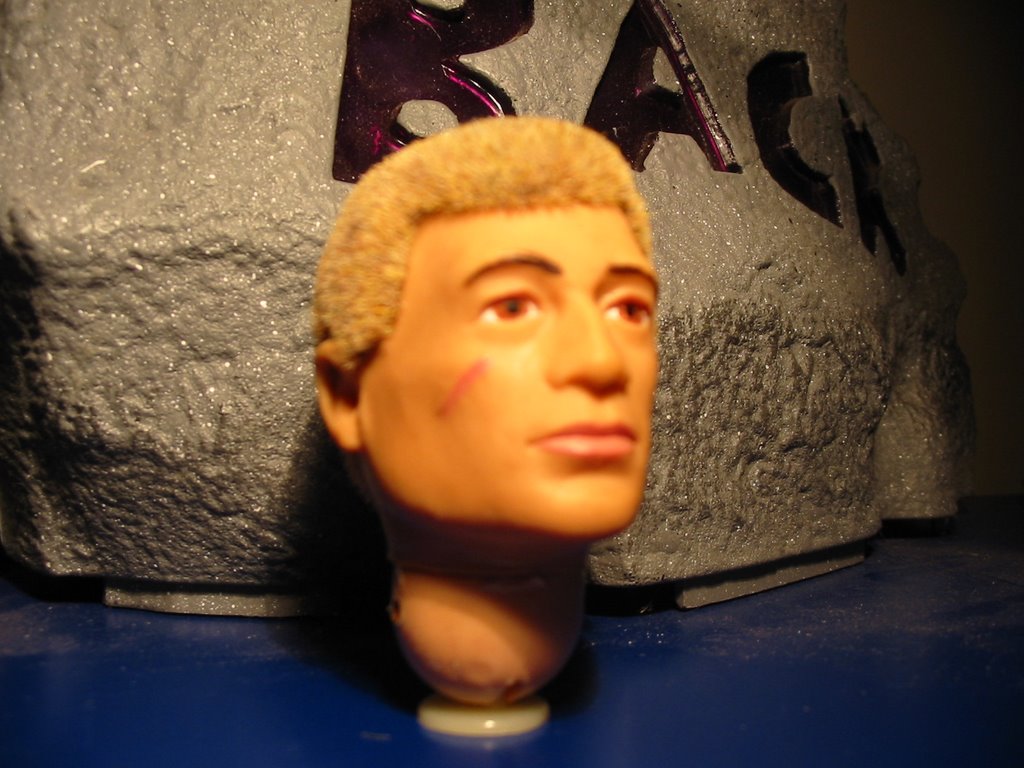
I, on the other hand, was struggling. I had a seed of an idea, derived from my hobby of collecting GI Joes (and similar 12" action figures) and my childhood love of GI Joe, Major Matt Mason, and their kin. It also played on the sad fact that childhood is an endangered institution. These days, kids seem to go straight from diapers to video games, computers, cell-phones, and I-pods loaded with gangsta-rap. They're giving up traditional toys younger and younger, and simply never take to them with the enthusiasm that earlier generations did. It's my feeling that with the loss of that imaginative and unstructured play, we're losing something important from our culture, something that may come back to bite us in the ass later.

So, okay, I had a subject, and a theme, but I didn't have a story. I decided my protagonist would be "Backyard Joe," a tired old action figure who was still holding down the trenches in an overgrown back yard, long after the kids have gone on to other things. Valiantly, he guards his post against an unseen enemy that seems to lurk just beyond the high grass. His only companion is the "Limey" (a character in fact inspired by Action Man, GI Joe's counterpart in the UK) an action figure who seems even more broken down and dispirited than he is.

All this is good, but this gives us a character, in a situation, with a somewhat loosely defined problem. That's an opening, but it isn't a story, and that's where I struggled. I had a vague idea of where it might end, but I wasn't at all sure how to get there. The bridging events, the dark moment, the turning point of the story; these things were all missing. Even if I can make it work, there didn't seem to be enough meat there. The story needed to be at least 2000 words long, and I didn't see how I was going to make that with what I had.

So I write a little. I stare at the screen. I write a little more. I stare. I'm stuck. I hate most of what I've written. I hate the whole idea. Several times I'm tempted to throw it away and try to come up with a new idea, but I've got nothing, and I know that I'm probably just trading the devil I know for one I don't.

For me, the darkest moment was probably when Chris got word of her sale. I still was no closer to finishing, and I was starting to feel like a total fraud. (This is the kind of place where jealousy can rear its ugly head, and that's why I'm very wedded to the idea that other people's success is their own, and has nothing to do with you. You succeed or fail based on your own work. Other people's success can't hurt you professionally. It can bang your ego around, though, if you're busy having self-doubts.)

To put this in perspective, I've got a stack of novels under my belt, plus scripts, computer games, and other things. I've sold a fair number of short stories, including to major sf/f markets like Analog and The Magazine of Fantasy and Science Fiction, and to anthologies as well. But most of these sales were years ago, before I got distracted writing tie-in novels. More recently I've written stories under contract for tie-in anthologies, but not much original short fiction. Yeah, I can write a novel, but short-stories are a much different skill set.

So this is the part where the highly-trained writer brain starts making things up, starting with, "you're a fraud." Followed by "you can't do this," and "you never even knew how to do this, the other sales were flukes." That's what the writer brain does. It makes things up, and in that, it is often not your friend.

So this is also the part where many, maybe most, would-be writers give up. The difference with a pro is that (most days, anyway) they bull their way through. Maybe you justify it on the thought that, "maybe the editor will be so desperate for words they'll buy even this crap," if that's what it takes. But the professional thing to do is to keep going.

And I did. I figured out an approach, and by Tuesday evening I was over the considerable hump and headed for the ending. I'd managed to flesh out my story a bit, so that it easily went past 2000 words. I even got a good emotional hit while writing the ending, which I normally take as a very good sign.

In this case though, I was still a doubter. I was writing about something very personal to me. I got it, but would anyone else? Were my action-figure references too obscure, too "inside-joke" for the average reader? Had I written a "guy story" that my female editor just wouldn't get, or worse, just wouldn't like? Was it too sentimental? Was the ending too abstract?

The tragedy is, even at this point, some people still give up. The story goes in a drawer (literal or digital) never to emerge again, because the writer isn't sure that it will sell. Well, let me tell you, there's no certainty in this business, but if you don't submit it, you'll never know, and if you don't submit it, it can't sell.

By the time I'd gotten to my computer in the morning, there was a note from Denise saying that she was buying the story. I replied, thanking her, and saying "glad you liked the story."

To my surprise, I immediately got back a note starting, "Liked it, hah! I loved it!" It then went on to further praise the story's virtues. (Normally I wouldn't share the contents of such correspondence in public, and I hope Denise doesn't mind, as I do so only because it's necessary to the point I'm making.)

My first major point is, the writer is almost always the poorest judge of their own work. That doesn't mean that you can't look at your drafts and say, "this and this would make it better." You make this kinds of judgments with every word you choose to type.

What it means is that, when it comes to making critical judgments as to the over-all value or quality of the work, the writer's perspective is hopelessly skewed. This is a vital lesson for every aspiring writer to learn. You can have a first reader, of course, but any reader you know well enough to be worth trusting on other merits is probably too close to you to be entirely unbiased. Ultimately, the only test, imprecise though it is, of the merits of your work is to put it out in the marketplace, and see what happens.

Mind you, just because you think its crap, doesn't mean it isn't. In the beginning, especially, it quite possibly is. Don't worry about it. Mail it. Nobody is going to hold it against you for trying.

But as time goes on, and you've made some sales, it will be less and less likely that it's crap, no matter what the little critical-voice in your head says. Odds are it's at least competent. On good days, it may be far better than that. Maybe surprisingly better.

My second major point is that it isn't unusual to hit a point in the process where you're unhappy with what you're writing and lose confidence in yourself. Maybe some writers skip past that (and I envy them), but in my experience talking with many, many writers is that (for novels at least) it happens to a lot of writers at some point in every project. Knowing that it's usual, that others suffer from it, and that your critical-voice is entirely untrustworthy at this point; is a starting point in fighting your way over the barriers.

If you write, or want to write, and this hasn't happened to you, it probably will. How you respond to this challenge will be a major hurdle in your journey to professional success.

Keep writing.


I'm well behind in my posting here, and I've read a number of interesting things recently that I'd like to talk with you about, several of them writing related. Hopefully you'll be seeing some more major postings here from me in the next few days.

Meanwhile, remember that I post a new Minons at Work cartoon panel every Monday. Check it out, check back, and share it with your friends.

Thursday, July 06, 2006

Writers along the highway


Well, we're back from vacation. Obviously I didn't find time to post from the road, so I'll be backfilling here at some point. We had a good (if tiring trip). One enjoyable aspect was the opportunity to visit with writer friends, old and new, up and down the west coast.

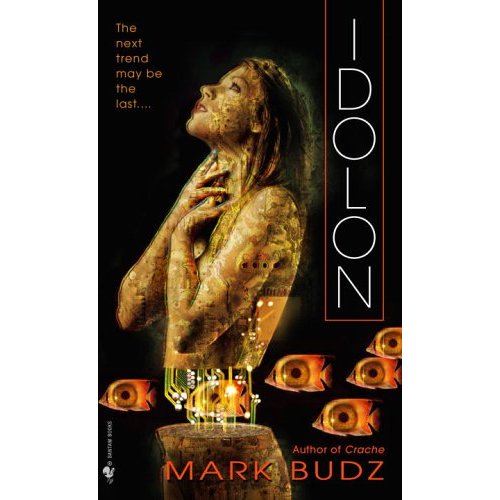
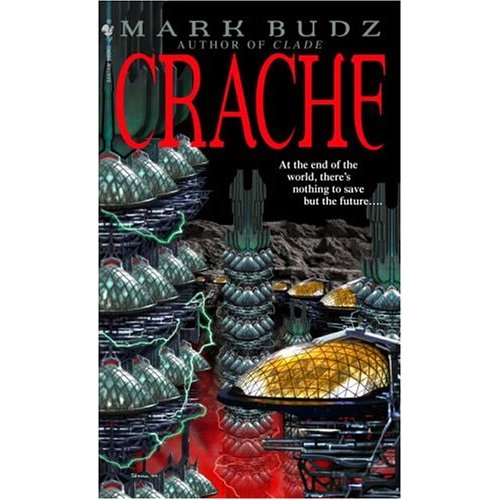
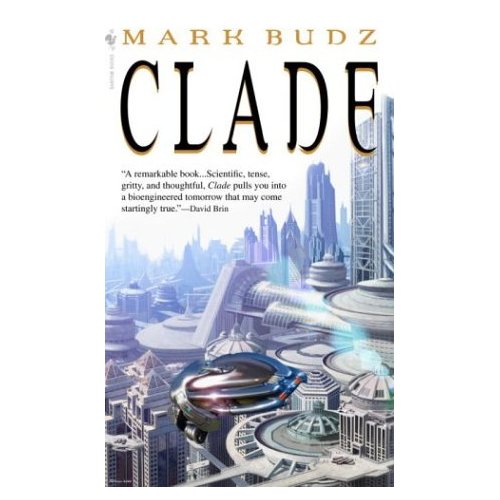
Our first stop was on the way down, where we stopped in the Bay Area long enough to have an enjoyable Chinese dinner with our friends Mark Budz and Marina Fitch. Both are novelists, and Mark gave me an advance-reading copy of his upcoming novel Idolon. This is Mark's third novel. His previous books, Clade and Crache were released to great critical acclaim (Publishers Weekly compares him to William Gibson) but just haven't gotten the reader attention they deserve. You should really check out Idolon when it's released this month, and see what you've been missing.

Then we trekked down to my old high-school stomping-grounds of North San Diego County and had a three-hour lunch (cue Gilligan's Island theme)with my old friend Gordon McComb and his wife Jennifer. Gordon and I used to collaborate back in my high-school and college days, and we did a number of student films together back in the day. My first professional publication (see a bit of it here and here) was an article in the old Science & Mechanics magazine written with Gordon.

Gordon went on to become a computer journalist and writer of technology books (everything from word processing software, to home robotics, to how to program your VCR so the number stops blinking). He was very successful, and even occasionally threw some work my way when I was still doing that kind of stuff. I knew he'd cut back on the writing lately, but I didn't know why.

Seems Gordon had people come up to thank him for his books, and then go on to describe the huge sums they were making as consultants based entirely on his work, far more than he was making on the books themselves! So these days, he's focused on his own consulting firm serving corporate clients and leaving the sucker-work -- er -- books, to somebody else. Gordon also continues indulging his long-standing interest in robotics, and has started his own small company to manufacture and market robot components, Budget Robotics.

Anyway, I haven't seen Gordon in years, and it was great to have a chance to catch up. Maybe I can convince he and Jennifer to bail out of Southern California before the Big One hits and move to the northwest (probably just in time for a volcano to erupt, but...).

Finally, on the way home, we stopped off in Eugene, Oregon for dinner with our friends Sean and Rose Prescott, and Adrian Phoenix. It's the first time we've seen Adrian since she sold her first novel, a vampire book, on a two-book deal to Pocket. Her novel will be used to launch an entirely new book line for Pocket, so they're obviously impressed. This is very exciting news, and overdue. Adrian is a fine writer with a unique voice. So, if you'd like a chance to get in on the ground-floor with someone who could be the next Anne Rice, you should look for the name Adrian Phoenix in months and years to come.

Thursday, March 30, 2006

Writers and other delusional people

UPDATED March 7, 2009 - Check at the end of the original post for new truths and comments.

I heard yet another story the other day of a writer being scammed by a so-called agent. What was most horrifying about the story was not that they were paying the agent to rewrite their stuff, but the sheer glee and delight with which the writer was submitting to the process.

Rule #1 in this business is: Money always flows towards the writer. If it doesn't, something is seriously wrong. If you fail to recognize this, or worse, mistake it for success, you are playing the fool.

There is no more gullible, self-delusional, fog-headed being on the planet than an aspiring writer. So predictable and common are their delusions that an entire industry of crooks, con-men and scam artists exists to exploit them, and such a sweet deal it is for them, too. Not only are most of their scams perfectly legal, their marks are actually grateful to be scammed! It doesn't get much better for a predator than that. It's like the entire herd of antelope crowding around the lion shouting, "Eat me! No, eat me!"

Wait. No. Keep reading. You may resemble this remark. Fact is, most of us do at one time or another. And if it does describe you, take comfort that you have plenty of company. I hear from these people all the time. Some of them I've had extended correspondence with, and I've learned some things.

Most of the writers getting scammed aren't dumb. They're nice, intelligent people who sincerely want to be writers, and have simply lost their way. Most of them are so invested in whatever flavor of Kool-aid they've swallowed that they not only can't see the truth, they don't want to. Yet most of them are aware, on some level, that something is wrong. That's usually why they write me. They have concerns. They have questions. Just not enough to wake up and look around. The correspondence, in antelope-terms, usually goes something like this: "This lion has actually agreed to take me on! Right now, it's chewing on my leg. And it's great! Although, I'm concerned about the bleeding. And the dismemberment. But really, it's good! It's great! Uh, should there be so much pain? But I'm good!"


Okay, here are the truths, some of them anyway, that every writer should know. Read them. Memorize them, Live them. And please, do so before you graze among the scam agents, book doctors, vanity publishers, and the various flavors of publishing delusionaries who, with the best of intentions, invite you to participate in their own mad delusions, and partake of their special Kool-aid.


Truth Numero Uno - Being Published vs. Being Read


First truth, and maybe even more important than rule #1 above (or at least as important): Writers do not need to be published. Writers need to be read. This should be obvious, but it's not. Having a pallet full of expensive hardcovers in your garage is not getting you read. Being in an ebook that's downloaded thirty times isn't getting you read. Going out through a small press or a literary zine with a print run of a hundred copies isn't getting you read (not in the way that you want to be, anyway).

Being read means selling to a national magazine, being published through a real book publisher and showing up on chain-store shelves, or at least being published on a high-traffic web-site with thousands of visitors daily. Yet again and again writers are seduced with the notion of seeing their manuscript in print between two covers. If this is you, my advice is this: Go to Kinkos and pick out a nice font, and some pretty paper. Then, once you have a book to look at, get over it and get back to the real work of getting read, or forget being a writer.

Corollary to Rule Numero Uno: The markets that will get you read most are generally also the markets that can afford to pay you the most money. Refer to Rule Number the Second.

Rule Number the Second - Payment

If you don't get paid, and I mean up-front, then it isn't a sale. People who don't have money to pay you generally don't have money because they aren't selling books. Refer back to Rule Numero Uno.

Corollary to Rule Number the Second: "Paid in copies" is an oxymoron.

Second corollary to Rule Number the Second: An advance is the only money you can ever count on, and even then, the check has to clear.

First Royalty Statement of Rule Number the Second: 6% of nothing is nothing.

Second Royalty Statement of Rule Number the Second: 100% of nothing is nothing.

Third Royalty Statement of Rule Number the Second: 110% of nothing is still nothing.

Rule Third, Third, Third - Editorial Opinions

Rule Third, Third, Third: Ultimately the only opinions about a manuscript that count are yours and the person who can actually buy the manuscript.

Rule Third, Third, Third Corollary One: Your mother cannot buy the manuscript.

Rule Third, Third, Third Corollary Two: Your workshop cannot buy the manuscript.

Rule Third, Third, Third Corollary Three: Your agent cannot buy the manuscript.

None of which means you can't listen to these other people, but the responsibility to apply (or not apply) their opinions is ultimately yours.

Scofield's Axiom (a superset of Rule Third, Third, Third): You are responsible for your own career.

Rule the Four - The Secret Handshake

Rule the Four: There is no secret handshake.

Rules 5 - Agents

Rule 5a: Any agent you can get as an unpublished, unsold writer is most likely not anybody you want as an agent. There are rare exceptions, but they are rare, and they are exceptions. Do not assume the agent courting you is either, until you have done much research.

Rule 5b: The primary job of an agent is to submit manuscripts and make deals. Agents do not sell manuscripts. Manuscripts sell themselves. If your manuscript is not equal to this task, the best agent in the world cannot help it.

Rule 5c: Anyone can call themselves an agent (just as anyone can call themselves a publisher). Saying it does not make it so. Neither does a business-card, letterhead, a web-site, or a line of snappy banter.

Rule 5d: Agents make their living off a percentage of the income stream of the writers they represent. Any deviation from this, either in terms of your own money or anyone else's, is at best highly suspect.

Rule 5e: Agents work for you, and not the other way around. That still doesn't mean you pay them, except as described in 5d.

Rules VI - Ideas

Rule VIa - Ideas are cheap. Ideas are plentiful. Stop thinking of them as being made of gold. A good writer can turn a bad idea into a good book far easier than a bad writer can turn a great idea into a good book. If you have only one great idea for a book, the best thing you can do is put it aside and think of a dozen more, because until you can do that, you probably aren't going anywhere as a writer.

Rule VIb - Nobody is going to steal your silly idea. Probably it isn't worth stealing, and if it is worth stealing, you probably aren't the first one to come up with it. In any case, so what if they do steal it? If you had an "idea for a house," and somebody else built it, would the house belong to you?

Rule VIc - Stealing words is a crime. Stealing ideas is frequently a smart thing to do, but always steal from the best. Start with Shakespeare and work your way forward.

Rule ala Seven - The Easy Genre

Rule ala Seven: There is no easy genre. Romance is not easy. Science fiction is not easy. Fantasy is not easy. Writing children's books is not only not easy, it is very, very hard. People looking for an "easy" genre don't want to write, they want to have written. They are pretenders. If you are the real deal, don't worry about what is easy, or what is hot. Write the stories you want to write, and the stories you want to tell. Practice. Develop your skills. You can worry about marketing later.

Rules da 8 - How Becoming Published Will Change Your Life

Rule da 8: When you make your first sale, your problems are only beginning.

Rule da 8.1: Publishers don't buy books, they buy careers. If you aren't thinking past your first book, you are of very little value to anyone. Pray the publisher forgets to ask.

Rule da 8.2: Wash, rinse, repeat. Repeating is the hard part.

Rule da 8.3: The only time a second book can be easier than the first book is when the second book is already written, and even there lie pitfalls.

Rule da 8.4: You can't rest on your laurels unless you have some, and even then, laurels don't pay the electric bill.

Rule da 8.5: Sharks gotta swim, writers gotta write. Sharks stop swimming, they die. What does this tell you about writers?

Statement of Limitation

Those are only a few of the truths that aspiring writers need to know, but they're enough for you to chew on for a while. Pretty much, success in this business boils down to do the work, submit the work, and keep learning. Don't waste your time looking for shortcuts, because none of them preclude these three basics and the search will waste your time.

And remember that you don't even have the right to call yourself a failure if you don't try, and you still don't have the right unless you've stopped trying. Until then, you're still a success waiting to happen.

Good luck out there. Just remember, you make your own luck.

UPDATE March 7, 2009 - YET MORE TRUTH
Here we are a couple years later, and I find myself revisiting this post, and lo, among the comments below (you can dig though yourself to find the context, though it isn't especially important), I made the following statement:

"I have a great agent that I'm very happy with."

Looking back at that, I added the following comment, and having done that, I decided it was important enough to move up here where people can more easily find it. Here is a slightly reedited version:

-------------

Interesting reading my comment above. See, my the Great Agent I mentioned is now somebody else's great agent.

Actually, they were somebody else's great agent while they working for me too. Turns out they weren't MY great agent.

So allow me to add:

RULES OF AGENTS

RULE OF AGENTS NUMBER THE FIRST
No great agent is a great agent unless they're great for YOU. It doesn't matter how good an agent they are for someone else. If you're going to work together, you have to be compatible in your goals and methods and they must be helping your career. It's a relationship. There are no absolutes.

RULE OF AGENTS #B
Ask not what you can do for your agent. Ask what has your agent done for you lately.

RULE OF AGENTS No. III
Despite what they'd like you to think, you don't need your agent nearly as much as your agent needs you. (And if you DID need them more than they need you, why should you trust them to serve your best interests, and not their own?)

RULE OF AGENTS Nbr. Fore
Should you discover your great agent is not great for you (or perhaps not great at all) apply SCOFIELD'S AXIOM (see the previous rules list) until the problem goes away. Not having an agent is an infinitely better situation than having an agent that isn't working for you.

-----------

Okay, let us return to the statement that started this:
"I have a great agent that I'm very happy with."

Let us add to the original list:
-----------

RULE NEIN - THE BELIEF RULE
Just because the writer believes something is true, does not make it so. The writer's capacity for self-delusion is boundless, endless, and sneaky as hell. None of us is immune.

Ever.

------------

Not even me.

And just so you don't think this is just sour grapes aimed at my former agent, it isn't. They really are someone's great agent, from what I can see. They might be yours.

Or not.

But when you're signed with an agent and things are perking along, it's easy to ignore the problems until you've done yourself considerable damage, and that's what happen to me. I let my agent's opinions undermine my self-confidence, and I sat on plenty of perfectly good novel projects until I let my career stall. (See "Rule Third, Third, Third - Editorial Opinions" above.)

I'm not saying my agent did it to me. I did it to myself, by hanging on with an agent whose methods and goals were not my own, and whose focus was (properly, from the agent's perspective) on bigger fish, and not the careers of smaller players like me.

I sat around for far, far too long fretting in the dark, before contacting my agent with hard questions, confronting the situation, and making the break.

Self delusion.

Why do writers do it?


As it happens, I'm currently reading an interesting book titled "Lonely Planets, the Natural Philosophy of Alien Life," by David Grinspoon (apparently out of print, but you can still buy it on Kindle) and yesterday I ran across these words:

"So strong is our desire for certainty in the face of this grand mystery that we cannot resist the urge to vastly overinterpret every bit of potential evidence." and "We find signals in the noise of existence and read into them the conclusions that we want to reach."

Grinspoon is talking about our (the big humanity "our") questions regarding the potential for intelligent life in the universe, but it applies perfectly to writers as well.

It's our nature. We're all sitting alone, looking out into the darkness, pulling patterns out of nothing, weaving stories out of dreams. It's hard to turn that off when we need to put on our business hats. Maybe it's impossible.

But we still have to keep trying.

Me too.

Good luck to us all.