Thursday, August 31, 2006

Tiny Planets, Big Egos, and Unintended Consequences


Last week the International Astronomical Union (IAU) passed a resolution that stripped Pluto of its traditional (at least since its discovery in 1930) designation as one of the planets of the solar system.

This was a knee-jerk (and in my opinion, wrong-headed, mean-spirited, ill-conceived, and premature) reaction to an earlier and more elegant proposal that would not only have reaffirmed Pluto's status, but immediately added the largest of the asteroids orbiting between Mars and Jupiter, Pluto's "satellite" Charon (due to a minor technicality they would have been designated as a twin-planet) and the unofficially designated "Xena," a recently discovered Pluto-like body located in the distant suburbs of the solar system. Not nine planets. Twelve.

But apparently what really frosted the astronomers was the almost certainty that we'll be discovering many more bodies like Pluto and Xena in the coming years. Dozens, possibly hundreds wait to be discovered out in the dark fringes of our celestial neighborhood.

This, according to the arbitrary will of the astronomers, is just too darned many. And with this vote, the truth about planetary astronomers is finally revealed. They are the under-achievers of science.

Not only can't they remember more than nine planets, nine is apparently too many so they've cut back to eight. We're talking Science for Dummies here. (And I don't mean to paint stellar astronomers with the same brush, as, according to one well-known source, they keep track of "billions and billions" of stars. Impressive.)

Compare this to chemists, who seemed to have no trouble with a periodic table that had more than 90 elements, even before the physicists started making more. Given the current 116 confirmed elements, we can only assume that they are, on average, about 14.5 times as smart as a typical planetary astronomer (up from about 12.888 times just days earlier).

One can only imagine if planetary astronomers were in charge of the periodic table. Certainly they'd have eliminated all the radioactive elements ("...anything unstable enough to have a 'half-life' just shouldn't be considered an element...").

Probably there are other places they would have cut back. Noble gases? "Don't interact with anything enough to be worth mentioning." Hydrogen? "Too darned light." Actually, they could have gone for four, well within the established mental capacity of a planetary astronomer: earth, fire, water and air. "If it was good enough for the Greeks..."

Or compare that to that most garden-variety version of the scientific mind, the family physician. They seem to have little trouble dealing with the more than 200 bones in the adult, human, skeleton, or even the 270 or so bones in a newborn (many fuse together as the baby grows).

Certainly, planetary astronomers would have long-ago cut loose the bones of the inner ear (too small, too different, and not connected to anything), or the thyroid bone that anchors your tongue muscles (also not connected to the rest of the skeleton). Heck, ribs, vertebra, those little things inside your fingers and toes? All similar members of a large class of objects, not worth calling bones. Heck, with a couple voting meetings of it IAU, I think they could get it down to the skull and pelvis, and we're really not so sure about the pelvis.

For that matter, as I recall from when I was a child and my mother was studying for her cosmetology license, even they were required to learn basic anatomy, including the bones of the body. So when you get right down to it, planetary astronomers aren't even smart enough to be hair-dressers. (It also means that my mother is, statistically speaking, many times smarter than any planetary astronomer on -- well -- the planet. Hi mom!)

Okay, okay, I'm having some good-natured fun here at the expense of my astronomer friends. (Well, I'll admit, that most of my science friends are physicists, mathematicians, or chemists, but you shouldn't read too much into that.) But I'm also making a point. My astronomer friends seems to be suspiciously eager to keep the planetary club small and exclusive. In turn, their reasons and reasoning seem, at least, questionable.

The original proposal for a definition of planet seemed simple and elegant enough. A planet would have been any body that has achieved a spherical shape through the action of its own gravity, and which follows an independent path around the sun. The new proposal reads more like an excerpt from the tax code, and in requiring that a planet have cleared its orbit of other bodies, may mean that we'd end up with no planets! (Pluto's orbit crosses that of Neptune, for instance, and many asteroids cross the orbits of the inner planets, including Earth.) Advocates of the new system complain about possible ambiguities of the earlier proposal (define "spherical," for instance), but ignore the big glass of muddy water they've served up in its place.

And though they rationalize their objections to the first proposal, it all seems to come down to "too many planets." I don't seriously think that objection is because they can't keep track of them all, which leaves me to wonder what their concern is. Could it possibly be that discovering a new planet was once one of the greatest achievements in astronomy? Maybe the idea that dozens, perhaps hundreds of such discoveries could be made in a single generation, just plain sucks all the special out of it. Or maybe its that those few astronomers positioned to make those discoveries could get just a little too famous too fast for some people's tastes.

Okay, I don't know that much about astronomy, but as a writer, I do know a thing or two about the importance of words. Even under the new system, Pluto and its icy kin would still be known as "minor planets," so what's the big deal?

It's just this: Defining terms are important. None of the definitions proposed for a planet seems to have much scientific value. Mercury isn't much like Jupiter, and never will be. There are many satellites in the solar system that we'd probably be happy to call planets, if they weren't already orbiting something else. All that's really being proposed is an arbitrary line in the sand that satisfies somebody's inflated sense of order. Over here the important bodies of the solar system. Over here, the other stuff.

Defining something as a planet gives it importance that has real-world (no pun intended) consequences. The most obvious example is NASA's New Horizons probe currently on its way to explore Pluto. Sending probes to study the outer solar system is incredibly expensive and technically challenging, so much so that New Horizons almost didn't fly. Would it have even been considered if Pluto had not, at the time, still been commonly designated a planet? I think not.

Then consider the thousands of smaller consequences. Will new astronomers be as interested in devoting their careers to the study of "minor planets," as opposed to the possibility of actually discovering a planet (even if it is only one of many)? Will as much grant money be devoted to "minor planets?" Will papers be as readily published? Will telescope time be allocated? Awards given out? Will studying "minor planets" get you tenure as fast as study of "real" ones? Will school-children even find them worth learning about?

The unintended consequence here is that the IAU has slammed the door shut on the newest (to our eyes) and potentially most exciting part of the solar system. We're just learning that the solar system is a much bigger and more complex place than we'd ever imagined. This is something worth of our attention and study. It is not "minor," it is "major" by any reasonable definition.

It would be ironic if we turned our back on the distant reaches of our solar system simply to salve a few swollen egos back on Earth. Yet according to the IAU, the final frontier should be very final indeed.

Sunday, August 13, 2006

More dangerous things

The times we live in. I soon expect you'll only be able to make a transatlantic flight naked, handcuffed, and sedated. You just don't know if you should laugh or cry. But personally, I prefer laughter.


Tuesday, August 08, 2006

Universal Untruth (Yet another writing post)


They say that anyone who attempts to defend his or her self in court has a fool for a client. Well, let's translate that to writing perspective. The writer who tries to critique their own work has a fool for a judge.

Let me illustrate my point with a little slice from my writing life:

A few weeks ago, my wife heard that Denise Little, an anthology editor she's worked with, had come up short on an upcoming anthology. Several of the people on her invited list of writers had come in much shorter than usual, so she needed 10K words, and she needed them fast, so the book could be turned in. Chris immediately wrote her and said that one or both of us would come up with stories for her.

Mind you, "fast" in this case meant we heard about it on Friday, and she needed stories by the middle of the following week. Mind you, this was a theme anthology, the working title being "Front Lines," and so not just any story would do.

Sub-lesson #1 here for the aspiring and new writers in our midst: this is the sort of situation that separates the writers from the neos. The ability to produce work quickly, on time, to specification, and to market, is a highly valued skill in the marketplace. When these sorts of opportunities come along, and they will from time to time, the ability to follow-through will get you far.

So, kudos to Chris here. She very quickly came up with a fantasy idea, wrote it, mailed it over the weekend, and had a sale by Monday. That's professionalism for you.

I, on the other hand, was struggling. I had a seed of an idea, derived from my hobby of collecting GI Joes (and similar 12" action figures) and my childhood love of GI Joe, Major Matt Mason, and their kin. It also played on the sad fact that childhood is an endangered institution. These days, kids seem to go straight from diapers to video games, computers, cell-phones, and I-pods loaded with gangsta-rap. They're giving up traditional toys younger and younger, and simply never take to them with the enthusiasm that earlier generations did. It's my feeling that with the loss of that imaginative and unstructured play, we're losing something important from our culture, something that may come back to bite us in the ass later.

So, okay, I had a subject, and a theme, but I didn't have a story. I decided my protagonist would be "Backyard Joe," a tired old action figure who was still holding down the trenches in an overgrown back yard, long after the kids have gone on to other things. Valiantly, he guards his post against an unseen enemy that seems to lurk just beyond the high grass. His only companion is the "Limey" (a character in fact inspired by Action Man, GI Joe's counterpart in the UK) an action figure who seems even more broken down and dispirited than he is.

All this is good, but this gives us a character, in a situation, with a somewhat loosely defined problem. That's an opening, but it isn't a story, and that's where I struggled. I had a vague idea of where it might end, but I wasn't at all sure how to get there. The bridging events, the dark moment, the turning point of the story; these things were all missing. Even if I can make it work, there didn't seem to be enough meat there. The story needed to be at least 2000 words long, and I didn't see how I was going to make that with what I had.

So I write a little. I stare at the screen. I write a little more. I stare. I'm stuck. I hate most of what I've written. I hate the whole idea. Several times I'm tempted to throw it away and try to come up with a new idea, but I've got nothing, and I know that I'm probably just trading the devil I know for one I don't.

For me, the darkest moment was probably when Chris got word of her sale. I still was no closer to finishing, and I was starting to feel like a total fraud. (This is the kind of place where jealousy can rear its ugly head, and that's why I'm very wedded to the idea that other people's success is their own, and has nothing to do with you. You succeed or fail based on your own work. Other people's success can't hurt you professionally. It can bang your ego around, though, if you're busy having self-doubts.)

To put this in perspective, I've got a stack of novels under my belt, plus scripts, computer games, and other things. I've sold a fair number of short stories, including to major sf/f markets like Analog and The Magazine of Fantasy and Science Fiction, and to anthologies as well. But most of these sales were years ago, before I got distracted writing tie-in novels. More recently I've written stories under contract for tie-in anthologies, but not much original short fiction. Yeah, I can write a novel, but short-stories are a much different skill set.

So this is the part where the highly-trained writer brain starts making things up, starting with, "you're a fraud." Followed by "you can't do this," and "you never even knew how to do this, the other sales were flukes." That's what the writer brain does. It makes things up, and in that, it is often not your friend.

So this is also the part where many, maybe most, would-be writers give up. The difference with a pro is that (most days, anyway) they bull their way through. Maybe you justify it on the thought that, "maybe the editor will be so desperate for words they'll buy even this crap," if that's what it takes. But the professional thing to do is to keep going.

And I did. I figured out an approach, and by Tuesday evening I was over the considerable hump and headed for the ending. I'd managed to flesh out my story a bit, so that it easily went past 2000 words. I even got a good emotional hit while writing the ending, which I normally take as a very good sign.

In this case though, I was still a doubter. I was writing about something very personal to me. I got it, but would anyone else? Were my action-figure references too obscure, too "inside-joke" for the average reader? Had I written a "guy story" that my female editor just wouldn't get, or worse, just wouldn't like? Was it too sentimental? Was the ending too abstract?

The tragedy is, even at this point, some people still give up. The story goes in a drawer (literal or digital) never to emerge again, because the writer isn't sure that it will sell. Well, let me tell you, there's no certainty in this business, but if you don't submit it, you'll never know, and if you don't submit it, it can't sell.

By the time I'd gotten to my computer in the morning, there was a note from Denise saying that she was buying the story. I replied, thanking her, and saying "glad you liked the story."

To my surprise, I immediately got back a note starting, "Liked it, hah! I loved it!" It then went on to further praise the story's virtues. (Normally I wouldn't share the contents of such correspondence in public, and I hope Denise doesn't mind, as I do so only because it's necessary to the point I'm making.)

My first major point is, the writer is almost always the poorest judge of their own work. That doesn't mean that you can't look at your drafts and say, "this and this would make it better." You make this kinds of judgments with every word you choose to type.

What it means is that, when it comes to making critical judgments as to the over-all value or quality of the work, the writer's perspective is hopelessly skewed. This is a vital lesson for every aspiring writer to learn. You can have a first reader, of course, but any reader you know well enough to be worth trusting on other merits is probably too close to you to be entirely unbiased. Ultimately, the only test, imprecise though it is, of the merits of your work is to put it out in the marketplace, and see what happens.

Mind you, just because you think its crap, doesn't mean it isn't. In the beginning, especially, it quite possibly is. Don't worry about it. Mail it. Nobody is going to hold it against you for trying.

But as time goes on, and you've made some sales, it will be less and less likely that it's crap, no matter what the little critical-voice in your head says. Odds are it's at least competent. On good days, it may be far better than that. Maybe surprisingly better.

My second major point is that it isn't unusual to hit a point in the process where you're unhappy with what you're writing and lose confidence in yourself. Maybe some writers skip past that (and I envy them), but in my experience talking with many, many writers is that (for novels at least) it happens to a lot of writers at some point in every project. Knowing that it's usual, that others suffer from it, and that your critical-voice is entirely untrustworthy at this point; is a starting point in fighting your way over the barriers.

If you write, or want to write, and this hasn't happened to you, it probably will. How you respond to this challenge will be a major hurdle in your journey to professional success.

Keep writing.


I'm well behind in my posting here, and I've read a number of interesting things recently that I'd like to talk with you about, several of them writing related. Hopefully you'll be seeing some more major postings here from me in the next few days.

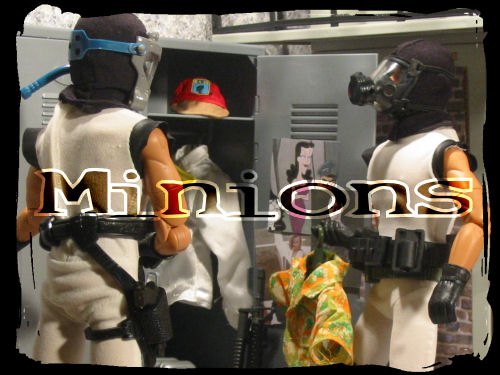
Meanwhile, remember that I post a new Minons at Work cartoon panel every Monday. Check it out, check back, and share it with your friends.

Tuesday, July 18, 2006

Kudos for Chris


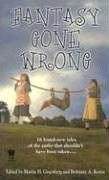
The upcoming anthology Fantasy Gone Wrong features a story by my wife, Chris, and it's just been singled out for praise in a Publisher's Weekly review.

Yahoo, Chris!

Friday, July 14, 2006

Another year gone

For me anyway. It's my birthday today. I'm looking forward to tonight's dinner (a bunch of the local writers at a local Chinese/Sushi place that's pretty good). There will be gifts, but I don't have huge expectations. I'm the hardest person on Earth to shop for, and if I want it and it doesn't cost a mint, there's a fair chance I already own it, or if I don't own it, I don't have any place to put it!

Which isn't to say gifts aren't fun and there might be some happy surprises, but they aren't what this is about any more. It's about friendship (not family this time, unfortunately, as most of the family is too far away to attend), and there aren't many things more important, or that I value more highly.

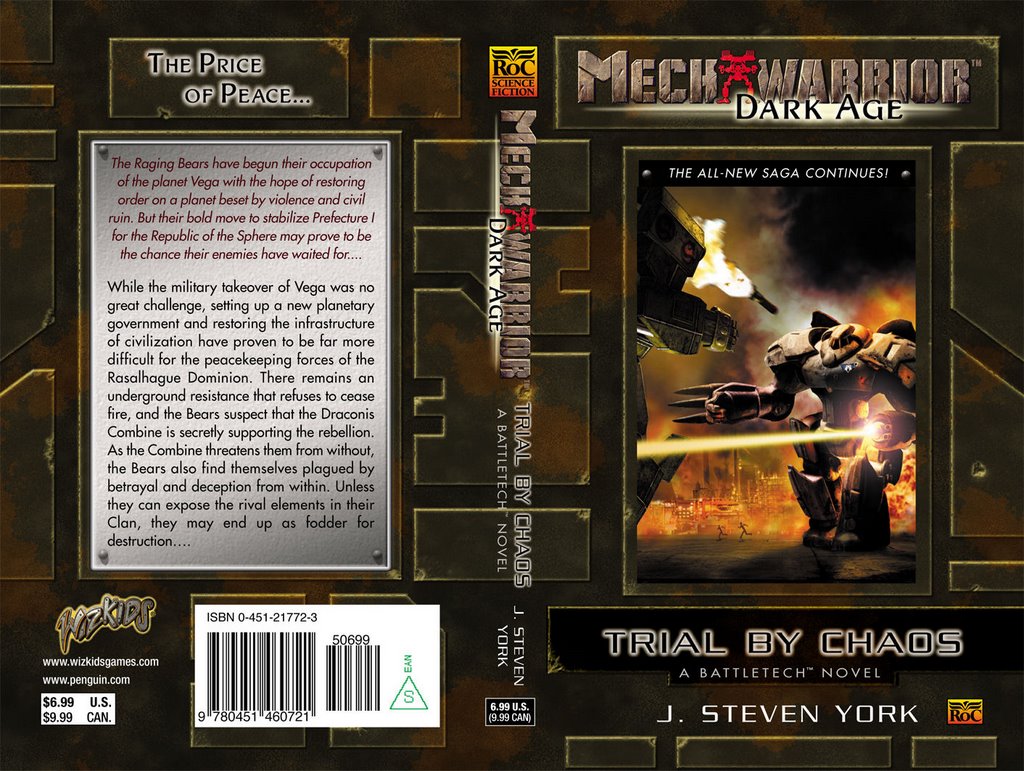
Overall, it's a pretty good life at the moment. I've got a wife I love. I live at the beach. I'm not rich, but I'm far from broke. I had four novels come out in the last birth-year (the Age of Conan trilogy in late 2005, plus my Mechwarrior book Trial by Chaos last month). The kids seem to be doing great.

Out there on the horizon, the world is going to hell, but here at Hangar 18, for the moment, knock on wood, things are good.

Monday, July 10, 2006

New Minions Warning -- er -- Alert


A fresh Minions toon can be seen tonight on the WB!

No, wait, the WB is toast. Maybe you'll find right now at Minions at Work instead.

MechWarrior Dark Age Q&A


This post is aimed for my MechWarrior readers. The rest of you can read or skip as you wish. Even MechWarrior readers should be warned that it contains some minor but important spoilers for Trial by Chaos (though I'm not sure how much sense they'll make out of context anyway, if you haven't read the book). If you intend to read it, you probably will want to do so first, then check back.

Now, on with the program.

I love fan mail (the polite and sane kind, anyway!), and try to reply when I can. A few days back, a comment here asked some questions that may have some wider interest, so I'm answering them in the form of a blog post.

I really loved Trial By Chaos, and I will be watching (hopefully reading :) ) the direction the Ghost Bears are headed for, but one thing has me chomping at the bit to find out more about... The Final Codex.. I know i am not the only MW junkie jonesing for it, any chance we will see it soon?

Thank you,
John Ingram


Thanks for your kind words, John. I'm very glad you enjoyed the book.

I can understand your curiosity about The Final Codex. I'm curious too!

Fact is, I was intentionally vague about The Final Codex, in part because I didn't want to reveal too much about it if it wasn't necessary to the plot, and in part because I wasn't sure when I proposed it how Wiz Kids was going to respond to the idea. In fact, my proposal for the book is careful to point out that we could end the book with the Codex being an obvious fraud, or leave it ambiguous.

To my surprise, they were very open to the idea, and I think you can take it as official canon that The Final Codex exists, or at least, it existed, and that the version the Ghost Bears see will have at least some of that text. But it's likely that they won't see all of it, and that some of what they see will be modified, and that there will be some creative additions made to support the agenda of the Freeminders and the U-Khan.

Of course, the question you're asking is, will the fans ever get to see the contents of The Final Codex?

I think the answer is a definite, "maybe."

The only copy we know for sure that still exists is with the Freeminders, but it suggests that the Ghost Bear Loremasters may have an copy somewhere. It seems probable that at one time all the clans had a copy. Now, it also seems likely that the Crusader clans might have had reason to "lose" their copies at some point, but perhaps some copies still exist among the Warden Clans, or even the Unnamed. These could well surface at some point. So maybe some more of the text will be revealed over time.

The problem being, the odds are slim that I will get to be the one to do it.

You see, one of the frustrations of writing the Dark Age books is that MechWarrior Dark Age is the ADD kid of book lines. Because the books chase along after the ongoing game releases, tournaments, and campaigns, I keep getting bounced from faction to faction, and books and characters that I'd love to follow up on get left behind.

For example, when I was writing "Fortress of Lies," I was setting up Duke Sandoval for his downfall, which did happen, in a book written by my pal Loren Coleman. I don't mind that, since Erik is really Loren's character anyway. But as I was writing the book, the story I really wanted to write was about Aaron in exile. I want to tell the story of what happens to him after he's had his butt kicked and almost everything he considers important stripped of him. From my point of view, he was already a fascinating character, but in exile, he just gets cranked up to 11.

But instead, I got to write about the Ghost Bears. Not that this wasn't, once again, a nifty book to write, but again, we've got a really interesting bunch of characters, and a situation that didn't resolve with the end of that story. I'd love to revisit them. But alas, I'm off to some other factions for the next book (I'm plotting to find a way to bring Aaron back, but I have no idea if that's going to happen).

So, if I get back to my little splinter of the Ghost Bears, it will be a while. Maybe some other writer will get to do it first, which would be disappointing for me, but par for the course.

None of this should be taken as a criticism of Wiz Kids or the wonderful people I work with there. It's just business, and I fully understand why they do things the way they do.

So, what can you do about the situation? Well, I have some suggestions that might at least help.

First of all, write Wiz Kids and Roc (the publishers) and let them know that you liked the book, and that you'd like a follow-up (and hopefully, that you'd like me to write it, but that's your choice).

Second, you can support the book. If it's successful beyond the norm for a MechWarrior book, then they'll have more incentive to publish a follow-up. Encourage your friends to buy it. Talk it up on the various MechWarrior, Battletech, and other forums where you hang out. Post positive reviews on Amazon and other on-line bookstores. Plug it on your blog, MySpace, or web page.

Now, I'll admit this is a steep hill to climb, but if you're like me, you like a desperate battle against overwhelming odds. So wipe that blood off your chin, slam the throttle against the stops, and tell them, "bring it!"

Thursday, July 06, 2006

Writers along the highway


Well, we're back from vacation. Obviously I didn't find time to post from the road, so I'll be backfilling here at some point. We had a good (if tiring trip). One enjoyable aspect was the opportunity to visit with writer friends, old and new, up and down the west coast.

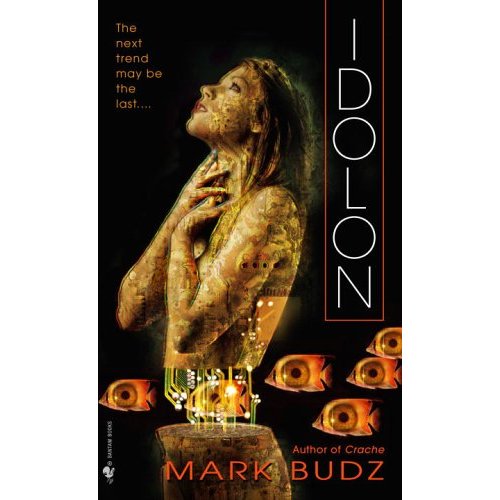
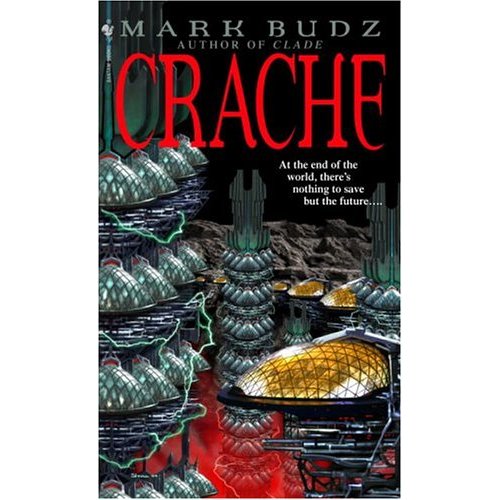
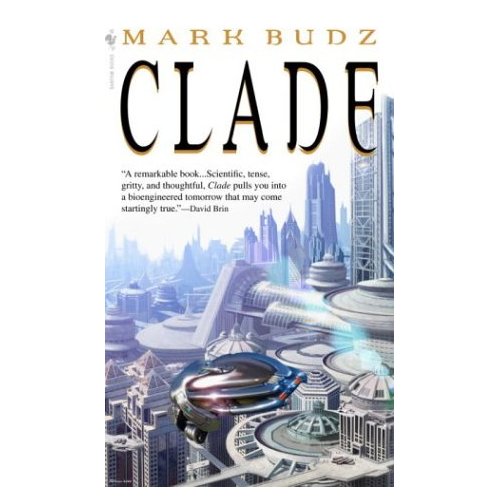
Our first stop was on the way down, where we stopped in the Bay Area long enough to have an enjoyable Chinese dinner with our friends Mark Budz and Marina Fitch. Both are novelists, and Mark gave me an advance-reading copy of his upcoming novel Idolon. This is Mark's third novel. His previous books, Clade and Crache were released to great critical acclaim (Publishers Weekly compares him to William Gibson) but just haven't gotten the reader attention they deserve. You should really check out Idolon when it's released this month, and see what you've been missing.

Then we trekked down to my old high-school stomping-grounds of North San Diego County and had a three-hour lunch (cue Gilligan's Island theme)with my old friend Gordon McComb and his wife Jennifer. Gordon and I used to collaborate back in my high-school and college days, and we did a number of student films together back in the day. My first professional publication (see a bit of it here and here) was an article in the old Science & Mechanics magazine written with Gordon.

Gordon went on to become a computer journalist and writer of technology books (everything from word processing software, to home robotics, to how to program your VCR so the number stops blinking). He was very successful, and even occasionally threw some work my way when I was still doing that kind of stuff. I knew he'd cut back on the writing lately, but I didn't know why.

Seems Gordon had people come up to thank him for his books, and then go on to describe the huge sums they were making as consultants based entirely on his work, far more than he was making on the books themselves! So these days, he's focused on his own consulting firm serving corporate clients and leaving the sucker-work -- er -- books, to somebody else. Gordon also continues indulging his long-standing interest in robotics, and has started his own small company to manufacture and market robot components, Budget Robotics.

Anyway, I haven't seen Gordon in years, and it was great to have a chance to catch up. Maybe I can convince he and Jennifer to bail out of Southern California before the Big One hits and move to the northwest (probably just in time for a volcano to erupt, but...).

Finally, on the way home, we stopped off in Eugene, Oregon for dinner with our friends Sean and Rose Prescott, and Adrian Phoenix. It's the first time we've seen Adrian since she sold her first novel, a vampire book, on a two-book deal to Pocket. Her novel will be used to launch an entirely new book line for Pocket, so they're obviously impressed. This is very exciting news, and overdue. Adrian is a fine writer with a unique voice. So, if you'd like a chance to get in on the ground-floor with someone who could be the next Anne Rice, you should look for the name Adrian Phoenix in months and years to come.

Tuesday, June 20, 2006

Herbie road-trip


We're leaving the cats with a sitter tomorrow and headed off in Herbie for a long over-due road trip. Good for us, good for the car (diesels really need to be run out, and we do far too many short trips). We're headed down to Lake Elsinore in California to visit our son and his family, with a side-trip to Las Vegas for a couple days.

I'll try to take some pictures, and possibly check in during the trip if anything of note happens.

See you in a few days.

Thursday, June 15, 2006

New book out (and Minion guest-appearance)

I realized that I have announced the arrival of my new Mechwarrior book in stores everywhere but here. Duh. Well Chris loved my in-character announcement over on my Minions at Work cartoon blog so much, that I've decided to repost it here (and save my self a few minutes in the process).

So, let's turn things over to Minion No. 1 (he hates it when you call him "No One.")


Greetings, comrade-dudes!

I am totally cutting into my vital pretzel-break time to bring you the important news of a new novel just released, written by Minions creator J. Steven York! Is called "Trial by Chaos," which pretty much describes the morning I've, I will tell you! This is his second novel in the Mechwarrior Dark Age series, set in the ever-popular Battletech universe.


I am totally urging you to run right out and buy this book on Amazon, Barnes and Nobel, Powells, or ask for it at your local book retailer.

No. Wait. I must totally be thinking like management if I am ever to be promoted. Do not ask. Demand this book.

You will be all like: "if you do not order this book from the nearest distributor, I will use my orbiting solar-death-mirrors to reduce your world to a blackened ball of carbon!" And they'll be like: "But we have it on the shelf right over here." And you'll be like, "oh, I never know if books like this are shelved according to series or author name." And they'll be like, "yes, different stores do it different ways, but there it is." And you'll be like, "well thanks for your help. Sorry about the solar-death-mirrors thing." And they'll like rip off their rubber disguise mask and shout, "but we've tricked you into revealing your evil plan! Now you can never succeed, Minion No. 1!"

I have just been busted in my own, imaginary scenario. That is so lame.

Just buy the book, because Steve pays the bills here, and without your support, you know what this means: mustard-cutbacks. Buy it for me. Buy it for my pretzel.

Later, dudes. Salty-buttery goodness totally awaits.

Monday, June 12, 2006

Did you get your Monday Minions fix?


It's Monday, and I just posted a toothsome new Minions cartoon over at Minions at Work. Check it out. Tell your friends. Alert the media. Lock your doors.

Saturday, June 03, 2006

Peace at last!


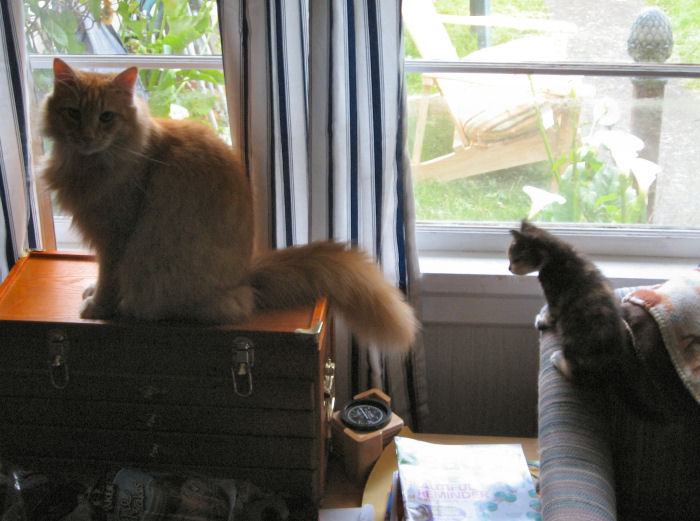
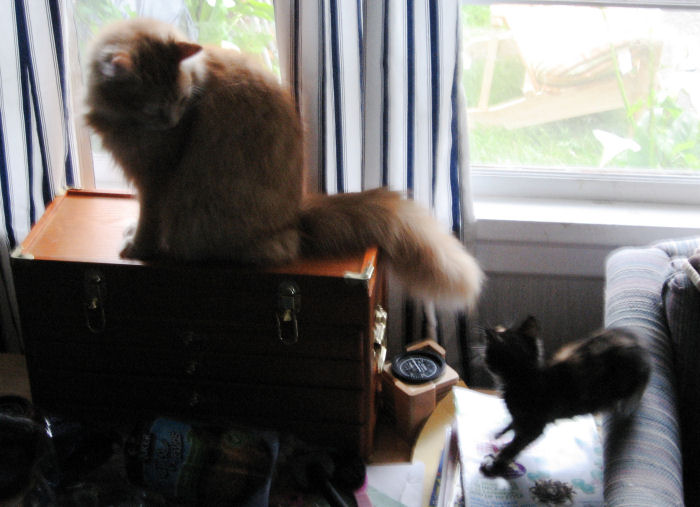
Well, not in the middle-east, but here on Tsunami Ridge, where our big tom-cat Oz has decided to accept the new kitten, Sydney. Not only is he putting up with her, he's actively encouraging her to play.

This is great for everyone in the house. Oz, because he was lonely, lethargic, and neurotic without his buddy Banzai (our 3-year old cat who passed away several months back). Sydney, because she was lonely too, and at just under six-weeks-old, still much in need of a cat role-model. Us, because it's keeping Oz happy and distracted for the first time in forever, and because it's helping to burn off a lot of that kitten energy and aggression that's been wearing us out.

These two are great to watch together. What's most amusing about it, is that Oz is usually content to let Sydney be the aggressor, leading her on wild chases around the house. Despite superficial appearances, these are his idea.

If he doesn't want to be bothered, there will be hissing, and a swat or two if she bothers him. But when he decides it's play-time, he makes his intentions clear. Sometimes, he'll hide and ambush her, but when he leaps out and surprises her, he'll immediately turn and run so she can chase him.

But it's the relative size-difference that really makes it a hoot. Sydney is growing rapidly, but she's only about two and a quarter pounds, and a lot of that is the pot-belly he has from his constant eating. Oz, on the other hand, is 14+ pounds of athletic muscle and fur. To watch that tiny dark kitten chasing a streak of orange fur many times her size is just something to see.

That's why I decided to post some pictures today that include both of them, just for a sense of scale. Here's Oz in one of his favorite spots, sitting on top of Chris' beading tool-box, watching the front yard for evil birds or bunnies. Sydney is creeping in from the right, watching Oz "hunt," and maybe seeing if she can interest him in a game of tag. (Remember you can click on the thumbnails above for the full-sized pictures.)

Thursday, June 01, 2006

A "Generation X" movie?


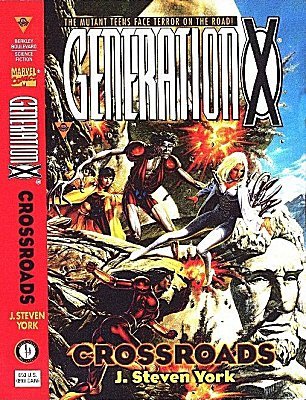
Some of you may be aware that a few years back I did a couple of novels, "Crossroads" and "Genogoths," based on a now-canceled Marvel Comic called "Generation X." The comic, which had a troubled creative and editorial history was great in concept. Xavier's School for mutants had become so focused on the X-Men and their agenda that a new school, the Xavier Institute, was formed elsewhere to carry on it's original mission, to locate young mutants and teach them to use and control their powers. One of the headmasters was Emma Frost, the White Queen, a reformed evil-mutant with her own troubled history of dealing with young mutants.

I loved doing those books, I'm very pleased with how they turned out, and I came to love the characters. And because so much of their development in the comics was vague or contradictory, I've always had a somewhat proprietary feeling about them.

This is based on nothing what-so-ever of course. The characters belong to Marvel (one of the wages of writing tie-ins, discussed elsewhere), and neither of my novels is considered "canon," that is, part of the "official" history of the characters. But I love my little dead-end stub of Marvel's X-Men, and I'm still proud to have been associated with them.

But despite the worthy concept (there was even a Fox network pilot for a TV series, aired as a TV movie but never picked up) and some sound characters to work with, the comic was ultimately doomed. The creative staff changed again and again. Various editorial hands pulled it this way and that. Jay Farber (who I had the pleasure of meeting just as he was taking over the book) did his best, but I think the editors never let him run with his ideas. Larry Hamma, best known for updating GI Joe back in the 80s, had an infamous run. If ever creator and subject matter seemed a bad fit, this was it. There were brief moments of glory, but Marvel never seemed to understand what the fans clearly did, that this was a gem in the rough.

The comic was canceled just as it seemed to be finding its legs, and most of the characters passed into oblivion. In fact, most of the characters are dead (as dead as anyone gets in the Marvel Universe) now, or changed almost beyond recognition. I expected that Generation X would never live again.

Well, that's still probably correct. But I was given a ray of hope today by an article in USA Today. Given the huge success of X3, a number of possible spin-offs are in the works. Here's a brief quote from the article:

"We've also talked about doing something on the kids in (Professor X's) school, focusing on their lives, and less of a global adventure for the team," says Hutch Parker, production president of 20th Century Fox.

Hey, I have an idea? Why not put them in a motor-home and take them on a cross-country trip where they fight injustice? Okay, okay, there will be ice-skating in hell first...

Actually, this is likely not the Generation-X that I knew. It could also be adapted from the "New Mutants," comic, or (this is probably most likely) be "X-Men Junior" featuring some of the younger character from the movie like Ice Man, Shadowcat, and Angel. (But there's former Generation-Xer Jubilee, who has appeared briefly in all three movies! Go Jubilee!).

Ironically, in addition to the previously discussed Wolverine and Magneto sequels, they have one more on the table:

The studio is also exploring a movie with Three Kings director David O. Russell based on the character of Emma Frost, a sexy mutant telepath who can transform her skin into diamonds. She is an X-Men comics regular but was not featured in the movies.

Maybe four is two many. Maybe if you guys just combined two of your ideas...

Yeah, dream on.

Monday, May 29, 2006

New Minions


It's Monday, so there must be a new Minions cartoon posted over at Minions at Work. Check it out. Tell your friends.

Friday, May 26, 2006

Horrors! Oh, Horrors!

At the risk of starting a flame-war, I simply can't resist responding to this recent comment here:


Found this blog through a conan site (remember the Superman III incident) and after reading a little, I am shocked at how "industrialized" writing has become. I had no idea that there was this group of mercenary writers pumping out cookie cutter stories. Not because that's what they wanted but because it paid the bills.
Are we living in the light beer age of writing? Will technology soon allow a new age of liberated authors to write great books similar to the recent explosion in microbrews?


I never fail to be amazed at the surreal and romantic notions that people have about writers, publishing and "literature" (however you want to define that last term). Publishing is a business, and it's been "industrial" since the invention of movable type and/or the printing press.

I don't really know where the notion came from of the lonely, alcoholic writer starving for their art, chiseling their masterpieces word by painful word, stuffing the pages in a drawer for posterity.

Fact is, its very difficult to find a writer who doesn't at least aspire to "pay the bills" through their works, even if that means publishing in obscure literary magazines to support a academic career, or taking to the lecture circuit to speak to the legions of people who would like to pretend to have read your work.

That doesn't mean I'm saying all writers are in it for the money, including myself. Sure, there are some very, very rich writers (look at J.K. Rowling, for God's sake!), but in general, there are far easier and more certain ways to get rich. Heck, there are far easier and certain ways to become middle-class. If you want money, there are better ways to go about it, and I think every writer knows that.

Most professional writers write because they love to write, because they have to write. It's only logical that these people try turn their inescapable obsession into some kind of paying gig. Otherwise, you have to keep a dreaded "day-job," and it cuts into your writing time.

Sell more, sell better, write more, spend less time flipping burgers. It's a pretty simple formula that's worked for a very long time. If you love to write, you hope to sell.

Of course, though the author of the comment doesn't specifically say so, I suspect they're taking a pot-shot at "tie-in" writers, people who (like me) turn out books based on existing properties and universes, comic books, computer games, TV shows, movies, etc. Ah, well, anybody in this business is used to it. We're used to being dissed, even sometimes by our fellow writers. It was exactly that situation that lead to the recent formation of the International Association of Media Tie-in Writers, an organization created to promote and honor the writers engaged in this challenging and under-appreciated area of publishing.

Though I'm a member, I'll be honest that I don't know why it's necessary. Those of us in the business know the score, and I really don't care what the world-at-large thinks. My goal is to entertain my readers with the best book I can produce, and enjoy myself in the process. Most days I think I accomplish that. Not always, but most days. I'm content to let history sort our the literature.

Of course the implication of any such criticisms is that any tie-in book is inherently inferior in some way to any original work of literature, which is simply nonsense. Hacks don't last long in this business. And no matter how good you are as a writer, if you don't take your work seriously, if you can't put your best effort into it, then it's time to hang up your hat and call it a day.

Is one likely to find the pinnacle of 21st century literature shelved among the tie-in fiction? I doubt it, though it isn't impossible, and you'll certainly find a good number of fine and serious novels. For certain, you'll find a preponderance of enjoyable and entertaining books, many of which surpass their source material in every way.

Why do people think tie-in fiction is inferior? Well, first of all, there's the matter of its being based on existing material.

Perhaps the assumption is that the author is somehow limited or shackled by this preexisting structure. As if western literature and the novel form itself weren't a complex kind of structure to which the author is generally expected to conform. Writing with such strictures doesn't make things easy sometimes, but it's endlessly challenging and helps develop the author's skills. It can detract from the work, sure, but it can also be the annoying grain of sand that generates the perfect pearl.

As if many works of celebrated serious literature weren't derived from earlier literary works, historical figures, or characters of myth and legend. For instance, this year's winner of the Pulitzer Prize for literature, "March" by Geraldine Brooks is derived from the classic "Little Women," by Louisa May Alcott. In that respect (and admittedly, in that respect only), it differs from a Star Trek novel primarily in that it wasn't licensed or approved by the owner of the original work. Ms. Brooks just took a classic work in the public domain and used it as the springboard for her novel.

And it's even a broad generality to say that tie-in novels are automatically highly derivative. Most of my tie-in work, from Conan to MechWarrior has mainly used elements of concept and background. Virtually all the characters and their situations have been entirely original. Not all of it. The Star Trek and Generation -X books, for instance, have used mostly existing characters, but even then, many of the supporting characters are original to the work.

Then there's the matter that most tie-in fiction is produced under battlefield conditions. No waiting for the muse. No excuses (or none that your editor is likely to care about). No delivering a book radically different from the one you promised. It needs to be done. It needs to be done on deadline. It needs to be done to specification. It needs to fit the package we're prepared to market.

Does that hurt the quality of tie-in works? Sometimes, but less so than you'd think. Tie-in writers are, by definition, fast, and I could do a whole separate post (and I may, at some point) on the literary myth that fast means hackwork, and slow means quality. That isn't, in my experience, true at all. Sure, it's possible sometimes to push a novel too hard, to write it too fast, and that can hurt a book.

But in my experience, the natural pace of a book that's working well is pretty fast. When the book is moving slow, it's often a sign not of quality of care, but of a writer struggling with problems, or flailing around on a book they really don't understand yet. There are examples of great novels that took years or decades to produce, but I'll wager that if you could have been a fly on the wall, very little of that span was actually spent typing on the project at hand. Most was spent procrastinating, researching, throwing away false-starts, working on other projects, dealing with life, or flipping those infamous burgers.

Then there's the taint of writing "popular" fiction. Too many people like that Trek crap, so it can't be good. I'm convinced this is a legacy of the English class system. Anything attractive to the dirty masses is obviously not fit for the refined tastes of the literary upper-class.

This taint carries over to popular fiction as well, where its easy to turn one's nose up at bestsellers simply on the basis of their success. Yes, there's some pretty poor writing in the bestseller pockets at your local grocery store (though all of it is entertaining and successful on some profound level, of it would never be a bestseller). Yes, there are some books there written in a paint-by-numbers fashion that makes the most restrictive tie-in book pale by comparison. But there's also some damned fine stuff there on occasion.

If one defines literature as "works that will continue to be published, read, and appreciated long after the author is gone," (and admittedly, that's only one of many possible definitions), then I suspect that much of what will be read by future generations will filter through those best-seller lists, while other, more celebrated "literary" works fade into obscurity. It's easy to forget that Charles Dickens, for instance, was the Stephen King of his day, turning out commercial entertainments that were serialized in newspapers for the pleasure of the masses, or that "Moby Dick" was a huge bestseller, the "Da Vinci Code" of its day.

Oh, the hackwork. The bill-paying. The industry. The horror.


There's one other element to this comment that I'm going to address separately and less formally:


Are we living in the light beer age of writing? Will technology soon allow a new age of liberated authors to write great books similar to the recent explosion in microbrews?


The technology freely to self-publish via the internet has existed for over a decade. The technology to cheaply self-publish short-run print books via laser printers has existed since the 70s. I see no evidence that any of this has resulted in any flowering of literature. The creation of the blog may have made some kind of contribution to journalism and the field of non-fiction essays. But literature? The impact is virtually nil.

I think that's easy to explain. There's a misguided popular perception that the entire publishing industry and editorial process is a barrier that separates an vast and undiscovered trove of great books from their potential audiences. A single afternoon picking through the slush pile of any national publisher or magazine will quickly break you of that notion.

In fact, these institutions are a filtering mechanism, sifting through a sea of muck for the occasional fleck of literary gold, or at least somewhat impure silver.

Sure, some good stuff occasionally doesn't get published, or more rarely, a self-published book will be "discovered" and go on to major success through a conventional publisher. But I think these counter-examples say less about the industry, than about the failure of the authors to effectively and doggedly market their books. Good books are rejected every day for a zillion reasons, most of which have nothing to do with the quality of the book itself. But that doesn't mean that a good book isn't highly likely to sell somewhere with continued effort.

Technology isn't going to "save" us from the publishing industry. The publishing industry is saving us from people who only think they can write a book.